
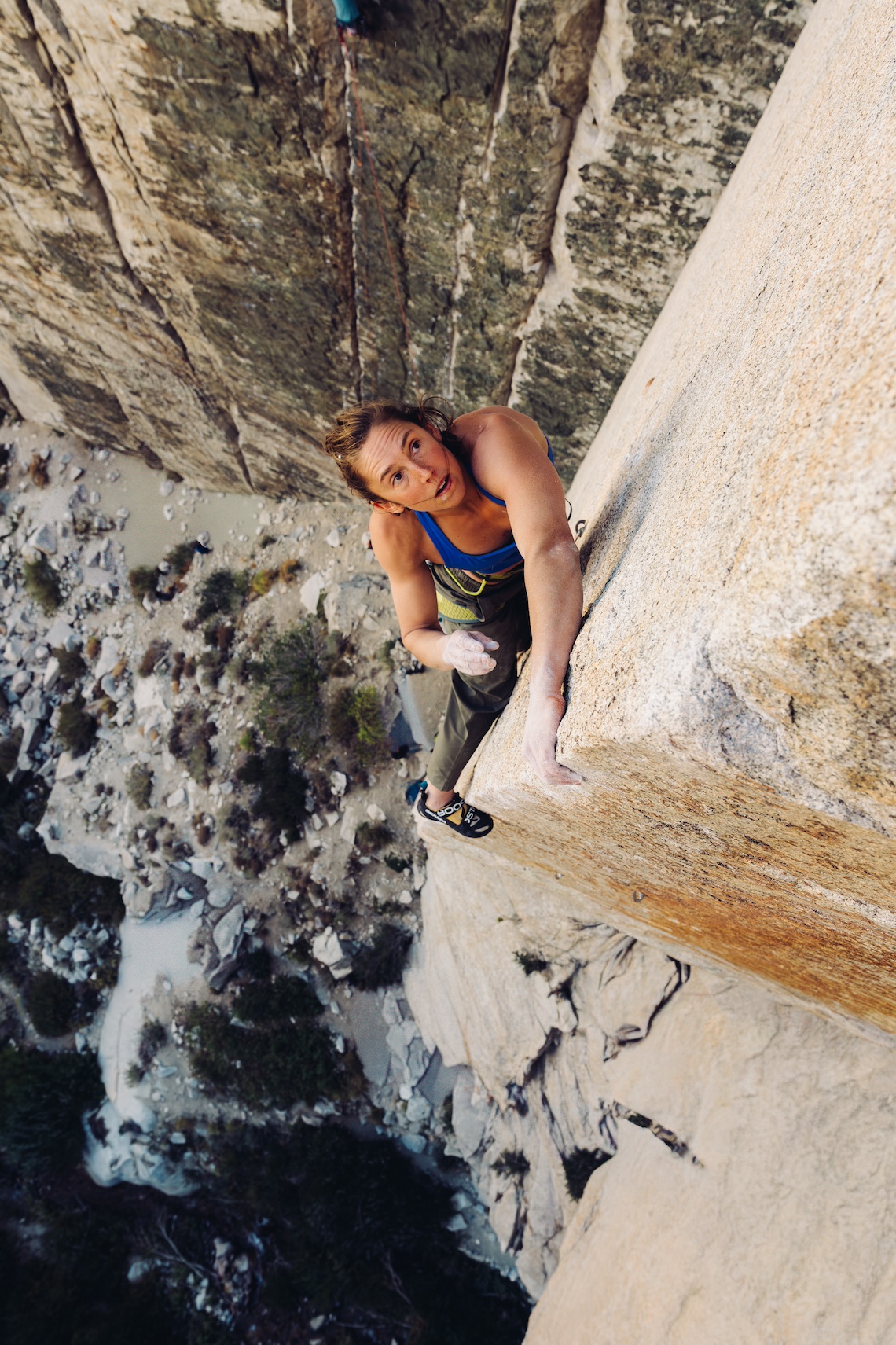
Cat: Welcome to The Broad Beta Podcast. I'm your producer and co-host Cat Coe.
Jeannie: And I'm Jeannie Wall, co-founder of Broad Beta. And today, we're excited to share stories of mountain women's adventures and to take a deep dive into how their lives have been transformed by their connection to wildness both inside and out.
Cat: Our guest on today's episode is Amity Warme. And if you don't know who Amity is, do yourself a favor and Google Book of Hate, Amity Warme. Trust me, it is worth the 8 minutes and 51 seconds.
And I guarantee you will want to watch it more than once. Amity oozes with the love for climbing and love for her fellow climbers. And if you see her at the crag, she wants you to come talk to her.
We can guarantee that if you do, she will not disappoint. She will not intimidate. And she'll just be psyched that you're outside sharing in her boundless love for trying hard on rock.
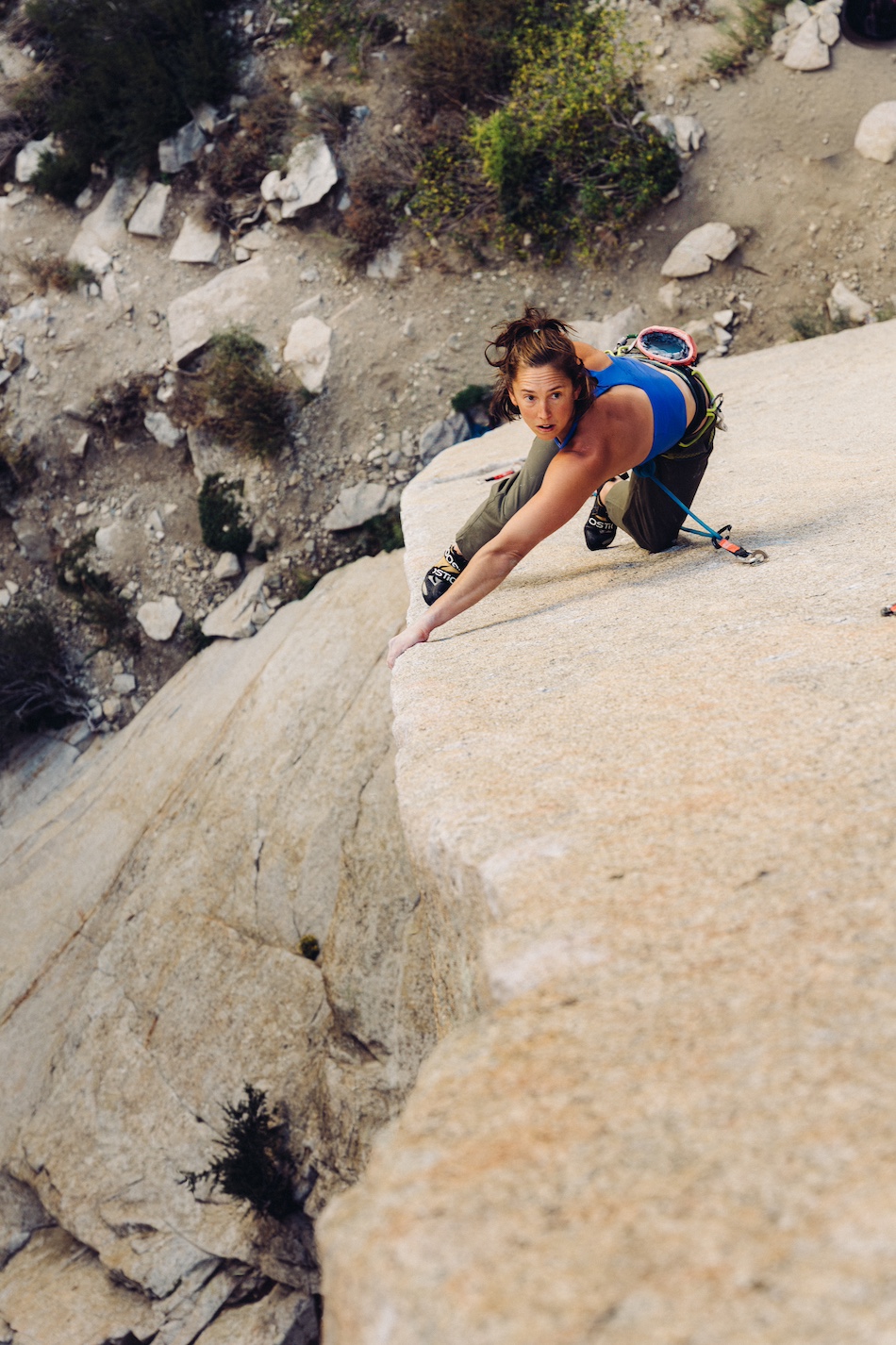
Amity grew up in Colorado and then began climbing in college in Texas. She has since free climbed mega routes like Freerider 13A, El Nino 13C and Golden Gate 13A. And the list goes on and on with multiple 13+ and 14A sends on trad gear.
She is easily one of the most impressive climbers on the planet. When Amity isn't absolutely crushing hard trad routes, she is helping others do so as a registered dietician with a master's in sports nutrition. Without further ado, let's welcome Amity Warme.
So Amity, why don't we just start out with you introducing yourself, telling us a bit about your background and where you grew up and how you got into climbing. And I know there was an injury at some point along the way that kind of played into all of this.
Amity: Yeah, Amity is my name and I grew up doing gymnastics my whole childhood. I fractured my back toward the end of high school. So that was kind of the end of that pursuit.
Cat: And how long had you been a gymnast at that point?
Amity: Yeah, 11 years from age 6 to 17.
Jeannie: Did you fall on a bar or something?
Amity: No, just two stress fractures from training five hours a day, almost every day of the week for my whole childhood. It's actually a fairly common injury in gymnastics. And my body is fairly long-limbed and limber, and hypermobile a little bit.
So I was a bit prone or primed for it, I guess. But yeah, that was a huge identity crisis in some way of spending hours and hours and hours dedicated to this sport every single day. And then losing that suddenly, it was like, I don't know who I am or what I do or like what I'm supposed to do with my time anymore.
Yeah, so that was a big, big shift. I've always been incredibly active and have a lot of energy. So I need this physical outlet.
So losing that in gymnastics, I needed to find something else active to be involved in. So I was kind of working on it.
Cat: With fracturing your back, what did time off look like? And what was the prognosis for you being super active again?
Amity: Yeah, oh gosh, I forget the exact timeline, but it was multiple months of not really doing hardly anything active to rehab that. So that was junior year of high school, and then I didn't actually start climbing until like freshman year of college. So there was a big gap in there of being disoriented or asking, what do I do with my life now?
Jeannie: I mean, you grew up in Colorado, did you get introduced to climbing earlier, and then just kind of fall for it after gymnastics, or did you just literally discover it after?
Amity: I went climbing one time in sixth grade, with my sixth grade class for some reason, and loved it, but I was so invested in gymnastics, like that was kind of the only thing, the only thing I knew, I guess. And so I went climbing once in sixth grade, had a good time, but never pursued it after that. My family wasn't super outdoorsy, they didn't have any idea that climbing was a sport that you could pursue.
Jeannie: Well, even though you grew up in Loveland, huh?
Amity: Yeah, yeah, just yeah, I never really got introduced to it. And then the university I went to was Baylor University, which is in central Texas. But I do a freshman orientation week every year.
And one of the options was, you could either go to campus, or you could do this outdoor adventure orientation week, which just happened to be in Colorado. So I attended that, and that was where I got reintroduced to climbing and camping and outdoor stuff. And yeah, it took to it immediately.
So then as soon as I got to campus, I beelined to the rock wall on campus.
Jeannie: It's kind of ironic that it takes going to Texas to actually get into climbing.
Amity: I mean, looking back now, it's like if I had been a climber before, I wouldn't have gone to the same school. I would have stayed in Colorado probably.
Cat: Yeah, that's funny. I got into climbing in Georgia. People are like, there's climbing in Georgia?
So then what did your progression look like from there? Because as Jeannie was saying, you have gotten so good, so fast. And it reminds me, we just interviewed Kate Kelleghan. (Kate did the triple crown in Yosemite in under 24 hours)
Kate also got incredibly good, incredibly fast. So I'm curious what the progression was for you?
Amity: Right. First of all, I think perception is such a funny thing. Because in my mind, I'm like, I'm not that good.
I didn't get good fast.
Jeannie: We're going to come back to that.
Cat: Putting in the work.
Amity: Perception is just like such a funny thing.
Jeannie: How old are you?
Amity: 32. I started climbing in college, but was still very much on the track of, I'm going to get a degree and get a job and live a normal life. So yeah, I was super recreational all through college. And then I actually lived in New Jersey for three years after that.
Cat: Texas and New Jersey. Perfect.
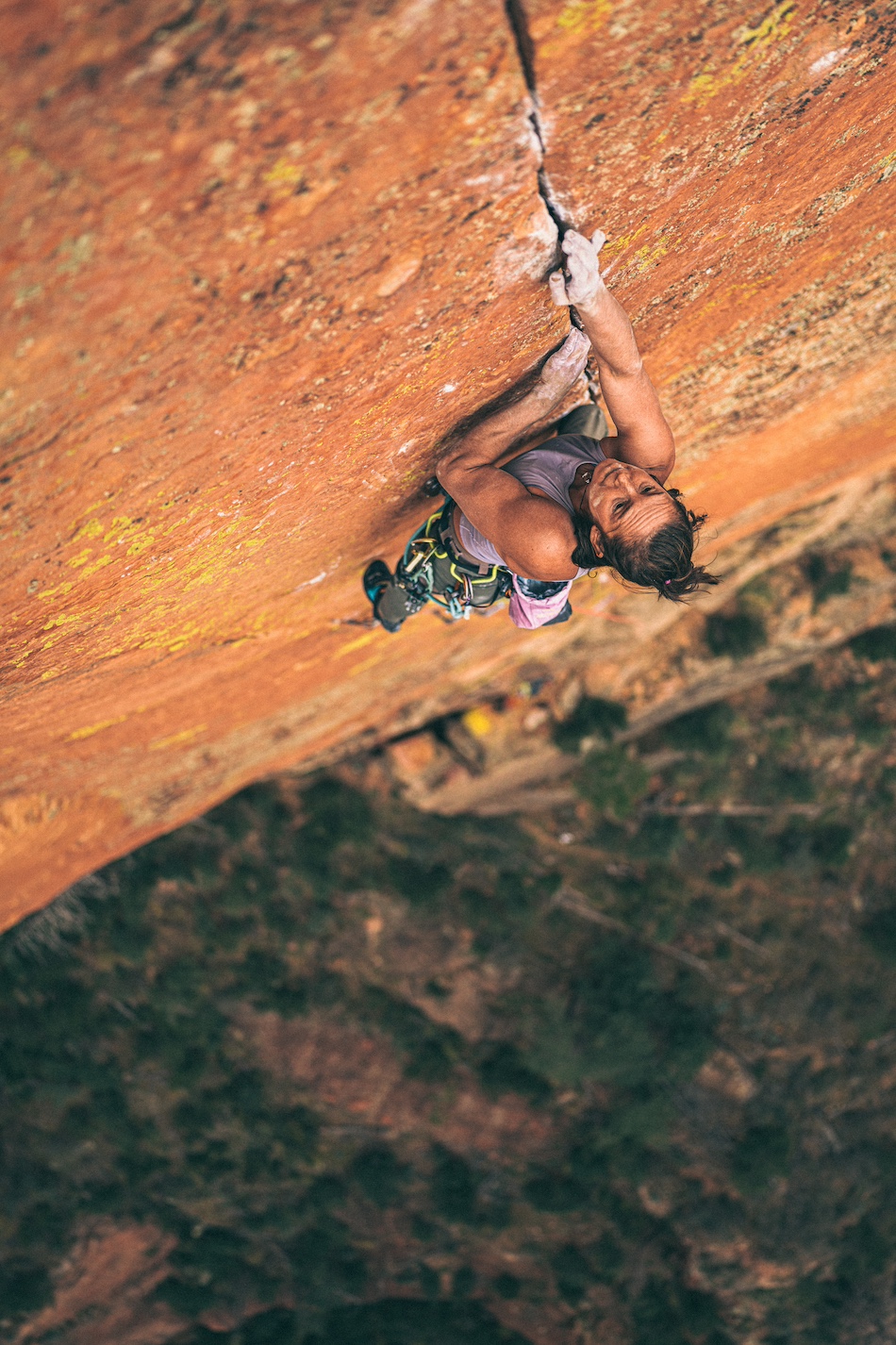
Amity: Oh yeah. Also not prime for rock climbing. So, again, I was kind of just involved in climbing, but not pursuing it full time at all, or with any intention of being sponsored or having this be my career or lifestyle or anything.
At the end of that time in New Jersey, transitioned to being in a van and starting to pursue climbing a bit more, I spent a year traveling and climbing. Then I went back to school for Sports Nutrition, which was back in Colorado Springs.
I was there for a couple of years. In Colorado Springs, I'm just climbing around that area for a while. That was where I actually got introduced to the first sponsor that I ended up having.
I was just around there. But anyway, I was still very much going to school and going to have a job. Then COVID hit and everything went online.
I spent a full spring season in Yosemite. That was the spring of 2021. I was just streaming all my classes online wherever I could find service and then going and climbing as much as I possibly could.
That was when I did Freerider and Golden Gate. That was the launch of like, oh, wow, I really love this. I could be pretty good at it.
Cat: Wow. You did that while you were in school full time.
Amity: Yeah. I did my courses online because it was COVID, but yeah.
Jeannie: But to back up a little bit, so school in Texas, you go to the climbing gym.
Amity: Yeah.
Jeannie: Obviously you learn a lot in the gym, but somehow you got hooked on being outside. Maybe touch on that and what compelled you to want to do the year in your van, and then how do you even get an idea that you want to climb something as big as Freerider when you've barely climbed?
Amity: That first season I went to Yosemite, Spring 2021, I really didn't go in with big plans of climbing El Cap. That seemed so far beyond my ability to imagine what I could do at that point. But I was meeting up with a friend there, I was going to climb together a bunch, and he had been on Freerider the previous season and hadn't quite sent it and was excited to get back on it again that year.
So I was just going into that with the mindset of like, I'm along for the adventure, I'm here for the ride, I have zero expectations of actually being able to do this. I hope I just don't mess it up enough that we have to bail. Hopefully, I can be a good enough partner to be on the wall together.
So yeah, I just went into the mindset of like, this is going to be a cool adventure, I'm going to learn a lot, I'm excited to be up there, but not having the expectations that I'm going to go climb El Cap and send it my first try. Yeah. So I think I had a soft entry to it, and a low expectations entry to it, which was helpful.
It ended up just being a really positive experience, and that was the same season a couple of weeks later, I very spontaneously went up El Cap again with Tyler Karow on Golden Gate. So another just kind of low expectation attempt, not a ton of planning and thought into it beforehand, but just like, we're going to go up and have this adventure and see what happens.
So both of those are very positive entry points into big wall climbing
Cat: So your second time ever on El Cap.
Amity: Yeah, so I did both Freerider and Golden Gate
Cat: The first time?
Amity: Yeah.
And then I remember coming back the next season and coming in with way more expectations of being like, oh, like, now I know I can do this, so I should be able to do it, you know? That's when I tried it.
I remember having a slightly less joyous experience up there and more of like, oh, I should be able to do this and have more expectations on it.
Cat: So, I'm so curious, how did you manage your energy and endurance not having the experience for big wall climbing and then sending on such massive routes? Did you have the endurance experience a different way that you were able to wing it?
Amity: I think my kind of strong suit in climbing is more of this, like all day endurance versus really high end power, strength, power, that kind of style. I think my gymnastics background’s biggest thing that translates into climbing is the work capacity.
I grew up my entire childhood, going to the gym five hours a day in training. So I think that work capacity has been the biggest thing that has translated from gymnastics into rock climbing. So I'd say that's kind of a strength of mine in climbing is just being able to go at a moderately high level all day and just do a lot of work and have the capacity for that.
I'm never going to be the strongest climber. I'm never going to be doing the hardest grades that people are doing. But I can do a lot of slightly easier climbing for a long time.
Cat: And for you, slightly easier is in the 5.13’s, which is really incredible. I know you don't realize how impressive and rare and awesome that is, but it is just hard for me trying to wrap my head around it. It's really, really inspiring.
Amity: But I mean, I appreciate that. And the crazy thing is it's also relative, right?
Cat: Okay, on the topic of all of it being relative, what to you blows your mind?
Amity: I meant so many things. I mean, we just like the pure difficulty of sport climbing, bouldering, any of that, like just the pure difficulty of what is possible. I mean, I may never climb like mid 5.14.
To me, that seems like a big reach to ever climb like 14C or something. I mean, people are climbing 5.15 regularly. So it's like that.
And that's just like an exponential increase in difficulty. And then to even talk about bouldering, like the level that is being pushed in bouldering at this point, it's just like, I mean, it's an entirely different sport from what I can conceptualize. Or what people are doing in comp climbing, like that kind of World Cup style climbing again, is just so different than anything I do in climbing.
It's like almost entirely a different sport. But the cool thing is to see it. I couldn't transition to World Cup climbing, but those World Cup climbers can transition to outdoor climbing, and that's going to be a crazy thing to see, like some of these artists' big climbs getting done.
Cat: I do think the technical skill part, though, takes a lot of time, you know?
Amity: For sure.
Cat: Maybe it takes less time than training to climb at a certain level, but it's just, there's just such a depth of knowledge that you have from primarily climbing outside and on gear and, you know? But it will be interesting to see more of that crossover in the next like ten years.
Jeannie: Going back to talking about your first seasons in Yosemite, were there any women climbers that had an impression on you or was it more of a mix?
Amity: Actually not really. And this was something I was thinking about coming into this. I feel super grateful to have had a lot of really positive climbing experiences with male climbing partners.
Yeah, going to Yosemite that season, like I climbed with Will Sharp and Tyler Karow, were the two people I climbed El Cap with that season. And they were both incredibly good climbing partners who taught me a ton about big wall climbing and that whole world. I never felt like, I don't know, looked down on or like had a negative experience, I guess, like learning from male climbing partners in those situations.
But yeah, there was never a big female presence in my climbing mentorship, I guess.
Jeannie: Going back to one of my earlier questions on how did you so quickly get motivated to go after something so big as freeing El Cap, right?
And at that point, there were three other women who freed El Cap, for sure, different routes. And I mean, you know, a lot of us who grew up with guys as the people we did a lot of athletics with, you don't really think about it. You're just like, well, someone's doing it, I'm going to do it.
It certainly doesn't have to be a woman.
Amity: Right.
Jeannie: But I feel like it is pretty cool that there was also no barrier in your mind. Like it wasn't like you went after it. Like reading this book about Arlene, you know, a lot of what they did is they wanted to be the first women to do stuff.
For you, it sounds like you just had personal goals. But it's like you saw people doing that and you were strong enough to think you could do it and you went after it. Or did those guys encourage you to?
Amity: Or maybe I was oblivious enough to think I could do it.
Jeannie: That's the best way.
Amity: I'm a pretty all in or all out person. I don't know. If I'm psyched about something, I'm pretty all in.
I guess I never, I don't know, I never approached climbing with the mentality of like, what I can do as a female versus male or just because I don't see other women as represented. I don't know. I just was never, that was never my mentality toward it, I guess.
And I've become more aware of that as I'm more and more integrated into the climbing community and climbing with other women and teaching women's only clinics, and I'll ask questions to these women like, would you do this clinic if it was co-ed? I think I'm becoming more aware of that.
Jeannie: I think it's easy not to be in that realm when you're just a really strong athlete. You know, I mean, you obviously could compete with all the guys and still can. And so it's not even in your realm to worry, you know, to think about it.
I'm so curious as to your own inspiration. And obviously, you're super goal oriented, an all-in athlete. So that helps.
And you just transferred that to climbing. But climbing, as you're saying, it's also community and it's culture. There's so much more to it that you're now experiencing.
That makes it so unique.
I'd love to hear more about that and more about how you connect with the wilderness aspect or the wildness of being, obviously, big walls are kind of your thing. Is that partially because you just love being out in a wild place?
Amity: Hmm. Yeah, for sure. I do love that experience.
It's such an improbable human experience to live on the side of a cliff for multiple days. I think what is compelling about big wall climbing is that it does require this full range or multitude of skills of being able to execute a hard boulder problem on a crux pitch, but also having the sport climbing endurance and the trad climbing knowledge or repertoire and this all-day capacity for labor and then the mental challenge of staying in that for multiple days at a time and not knowing if you're going to get shut down by a crux pitch on the very top and spend all this time up there and not actually do the thing. So I do think that's really compelling about big wall climbing.
I also kind of like to differentiate that my professional niche is probably hard trad climbing, multi-pitch big wall, but that's not what I'm doing all year, right? Like I'm doing maybe a big wall climb a year and then I'm spending a bunch of time at the sport crag just hanging out and like going sport climbing or going to the gym or like all these different things. It's like I'm never going to be a sponsored climber for my sport climbing difficulty, but it doesn't mean I don't do it.
Jeannie: Where do partnerships fall into that for you, both on a big wall goal versus obviously hanging out is hanging out and that's like super fun, but...
Amity: The climbing partnerships are super important to me. I think it's a really unique interaction relationship bond that you form in those climbing partnerships, particularly on a big wall thing where you are with that person 24-7 for the entire time of being on the wall and having to kind of hold for each other this space of the emotional highs and lows of like sending a crux pitch and you're psyched and then like getting to the next one and maybe you don't know if you can do it. There's just so much human experience condensed into the time on a big wall. And I think that's a really unique thing to share with someone.
Jeannie: OK, so just having seen Babsi's and then also Emily's films, which embody very different approaches to climbing El Cap, obviously both really commendable and inspiring. But when you're up there and you're working on a big wall project, is your partner there to support you leading every pitch or do you? I mean, is that mostly what you guys are doing or like in Babsi's case, she went there with her partner to attempt an onsight of Freerider together.
That's a really different thing.
Amity: There's I mean, there's a lot of different ways to approach doing a big wall. The way I've done all of the ones I've done so far are very much a team ascent where we're like swapping leads, swapping, hauling on all of the pitches, except for the cruxes. And then we're generally both leading the crux pitches.
Jeannie: There's no set ethic on whether or not you sent it with a partner or not, right? You don't have to lead every pitch to say you sent Golden Gate.
Amity: Right. I think a pretty standard or accepted team ascent is like swapping leads on everything and then both partners leading the crux pitches. A pretty accepted standard, I would say.
So it definitely takes more work and more effort to do it in this team style, where you're both getting to have the free ascent versus one person just being fully supported. But it also feels like a much richer and maybe more meaningful experience because you're both super invested and you're both experiencing these highs and lows of not knowing how it's going to go.
Cat: In one of the interviews I listened to, you talked about typically having multiple different goals and multiple things going on and so you don't really experience the post send blues.
Amity: Yeah.
Cat: Can you talk a little bit about that and just about your emotional resiliency in general that helps you avoid that?
Amity: I guess I've never approached climbing as ‘a singular goal is going to be fulfilling’ or that it would make it feel like I've made it or whatever. It's like I'm pursuing these different things and different goals and climbing because I just genuinely love rock climbing and I love pushing myself and I love trying hard.
And yes, I really love seeing things through and accomplishing the goal. I'm very much a ‘want to see things through to the end person’, but it's never a singular goal that is going to make me feel like I have made it as a climber or be, I don't know, all fulfilling or whatever. It's always like, cool, what's the next thing?
Like that was a stepping stone. Like what's next? I don't know.
That's all. I guess it's always been my mindset that I am in it to continually push my limits physically and mentally and explore what those limits are. And each of the climbs or objectives are just a piece of that process. They're not the end goal, I guess.
Cat: How does that compare and contrast to how you approached gymnastics as a younger person?
Amity: I think I've grown a ton mentally in my approach to athletics and goals and everything in the years that I've been a climber and particularly the last handful of years probably. I don't know. I guess gymnastics was, I don't think I had the maturity or bigger vision of seeing it as just this way of learning and growing as a person.
It was very much more results oriented and like, this is the big me and I have to do well and I have to place such and such to go to the next one or whatever. It was very much more results oriented. And I think over the last few years, I've realized climbing for me is just the, I don't know, I am very still like results and goal oriented, but bigger picture, it's that climbing is like this medium through which I've chosen to challenge myself and experience the world and explore my mental and physical limits and learn to deal with success and failure and build community and engage with the people around me and the world around me.
It's a much bigger picture than just a single climb and having objective success or failure on that.
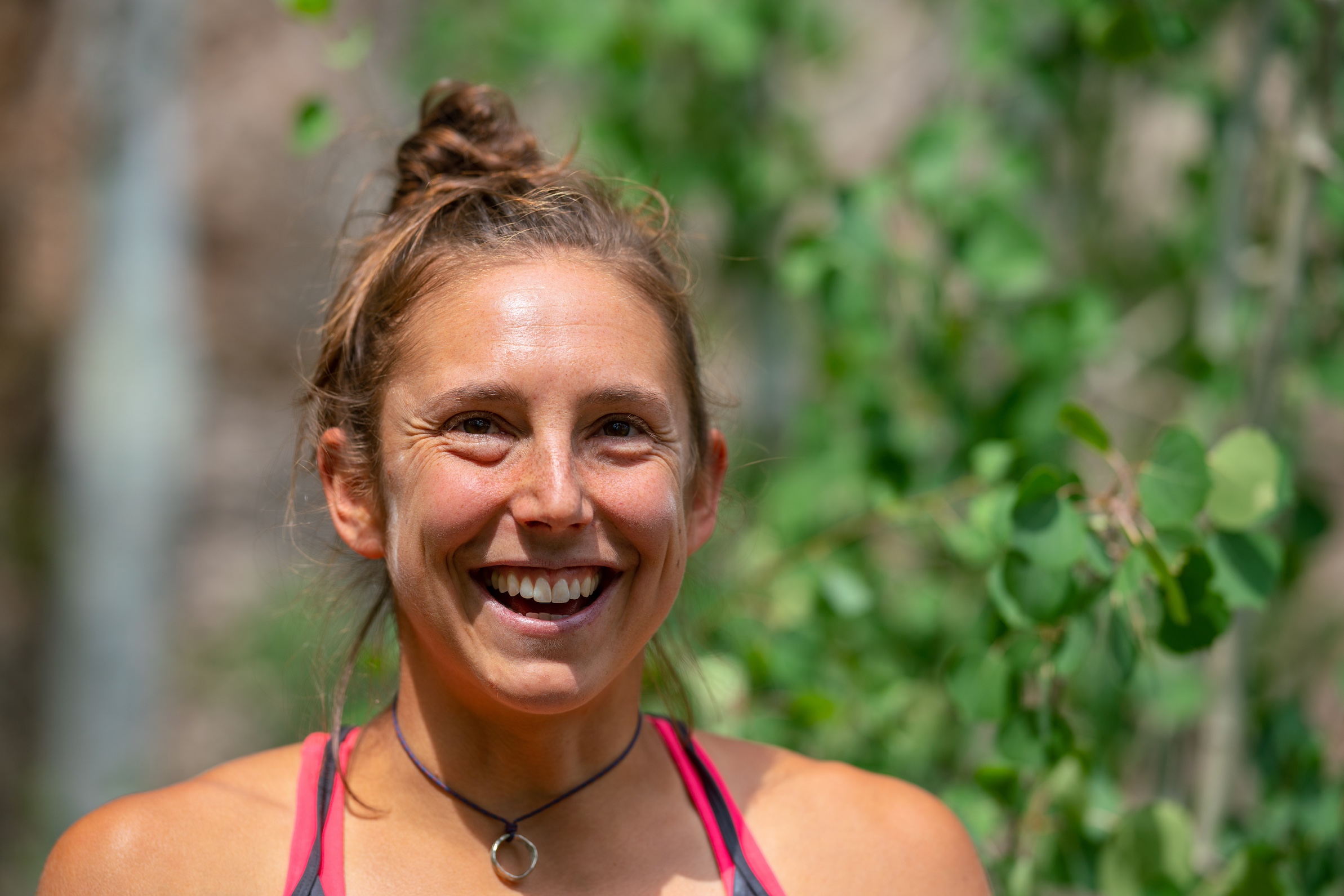
Jeannie: Can we go back to gymnastics maybe a little bit and then take it into climbing with fear? I think when you watch gymnastics, at the Olympics or any comps, it's mind boggling. It's freaking scary.
I mean, do they do mental training with you? And then how did you carry that into climbing? I assume you carried that into climbing.
Amity: Yeah.
Jeannie: I think it's just the physical part, but it's the mental part that to me is like, totally.
Amity: We didn't do a lot of mental training. And I think that was probably a bit of an oversight. Like I think there could have been a lot more room for doing some sort of work with a sports psychologist or something.
I think I've grown a ton in my fear management, understanding of risk and perceived risk versus actual risk. I've grown a lot in that in the past few years in climbing. I don't think I was super well equipped to deal with it in gymnastics.
I remember being scared a lot in gymnastics. And I still get scared in climbing, but I think I have more tools or experience now to deal with that. And I think, I don't know, I've had this thought sometimes looking back of like, obviously physically I couldn't go back to doing gymnastics now, like my body just couldn't handle that.
But mentally, I think I would be, I would do way better as a gymnast now than I did when I was 14, 15, 16, you know. I think my mental capacity or ability to deal with fear is a lot better now than it was.
And I definitely still get scared climbing. I've gotten a lot better at it recently. But like there's times I'm up on a slab or something, and I'm scared to fall. I don't know.
I'm not just immune to that, I guess.
Jeannie: No. But was there any tipping point for you or anything you can share that has helped you deal with the fear of falling so that you can push yourself harder?
Amity: Right. I think one important piece of it is dealing with the fear of failure.
Jeannie: Interesting.
Amity: Like when you're up on a climb and you're afraid of failing, you're way less willing to push yourself, I guess. If you're like, if you're always up there in a defensive mode and climbing not to fall versus climbing to send or climbing, I don't know, sending doesn't even have to be the objective. But whatever mini goal you have on that pitch, if you're climbing in a defensive mode of, I'm just trying not to fall versus I'm trying to whatever, do this sequence more smoothly or learn a better clipping position or whatever it is.
I think, yeah, dealing with that fear of failure helps you oftentimes get out of your own way. If falling equals failure, you're way more afraid to fall.
Cat: Hmm. Yeah. That reminds me of one of my favorite quotes: “I'm not afraid to be seen trying.”
I don't know. I think it just reminds me that trying and failing is better than not trying at all because if you don't try at all, you're definitely going to fail.
Yeah. This is something I talk to people about quite a bit. Maybe even more specifically, women, actually, of being intimidated to go to a crag and get on a climb that they might fall on because they're afraid to be seen failing or seen falling or whatever, and especially if there are other climbers around who are better or stronger or climbing harder things.
I just tell people, if you're there and you're psyched and you're trying hard, that's what people love. Like, they don't care if you fall on the 5.11. If you're trying hard and giving it, they're going to be psyched for you.
Cat: I learned that living in Lander, it was the first place I ever lived with a big sport climbing culture. When I first moved there, I was totally afraid to be seen trying and falling and hanging. And then I realized that everyone was just giving it and falling all the time. When I saw someone trying and falling, I was so much more stoked for them than the people that just weren't trying anything at their limit, you know?
Amity: Yeah, totally. People like effort. They just want to see you out there pushing yourself.
And this is the thing that always makes me laugh, is people will come talk to me at the crag or whatever and be like, yeah, you're just so relatable. I'm like, yeah, because I'm not actually that good. Like, I'm trying hard and I get scared on 5.12 or 5.13 or whatever.
I'm relatable because I'm within the realm of normal people.
Cat: That's really cool. It's just, I don't know. I think it's really helpful, for me and for other climbers at my very human level of climbing to talk to people who are climbing super hard and feel like I can relate to them and therefore, relate to their progress and their process, you know?
Amity: Yeah, totally.
Jeannie: I mean, part of it is your personality because you're just, you're very approachable and you don't give off any kind of air, I feel. I really appreciated meeting you the first time. And, I mean, obviously, the last time I was at the crag with you and Jonathan Siegrist was there and the whole Arc'teryx crew, and it was like superstar central at the Gecko Wall.
And I was just like, I had that same feeling of like, I'm not even going to lead anything right now because I'm too intimidated by who's around me. And I was at the end of the day and I had already torched myself.
Amity: No, I really appreciate that. That is something I really want to embrace is that I want to be approachable. I want people to feel like they can come up to the crag and say hi or talk to me or reach out or if they have questions or whatever.
That feels super important to me in cultivating the community around climbing and how I want to engage with the world. But also, I totally have those same feelings. I go to the crag that Jonathan's at or whatever and, like, see him climb.
And I'm just like, man, what am I even doing here? Why do I get paid to go rock climbing?
Jeannie: Well, you're deserving, but I get it.
Amity: It's all relative, though. Yes, it is.
Jeannie: But I love what you're saying, which is something that it's hard to appreciate. And I think it's kind of like good to make a mantra. It's just the effort is what is important.
And I think it is really hard when you're at a crag with a lot of better people. Like, you know, I have to step it down from you and Kate and everyone else - way down. Right.
You know, but going for it and whatever your level is, people are going to really respect that. And I think holding yourself back and being afraid because you're worried about what people think, it's like it has the opposite effect. Right.
Amity: Totally.
Jeannie: I also think Rolando Garibotti, you know, who wrote the Patagonia guidebook, used to talk about how all these climbers are on a trophy hunt. It feels like this also relates to something I always remind myself that he said, he's like, you know, if your adventure is Gillaumet instead of Fitzroy, and you do it under your own power with your own partner, you know, that's as worthy as climbing Fitzroy. It's just, it's hard when you're around superstars, seeing everyone send 5.14s that you get down to even if you're trying 12A, you feel like that's not worthy.
And I think it's nice that you're there at the crag trying to encourage all of us, especially women, I think sometimes it's just more needed. But, to go for whatever that trophy is of yours, your personal goal, and it doesn't matter the grade or how famous it is or not.
Amity: I think that's a super cool thing about climbing is how empowering it is to overcome those personal limits or mental barriers or whatever it is. And I think, I don't know, like climbing, the climbs themselves are not that important.
Like at the end of the day, it doesn't matter if I climb 5.13 or 5.14. Like no one really cares. It doesn't change the world.
But I think there is such a space within climbing to empower other people. And yeah, it's like the climb itself is this little microcosm of overcoming a fear or mental barrier or physical limitation or whatever. But that feeling empowered in doing that in your climbing translates to how you deal with hard things in life.
And like, I think that's a really cool jump to make of the climbs themselves like they're kind of meaningless at the end of the day. But the way that I interact with the community is I have this platform or ability to empower people to achieve their own goals and translate that from the climb to how you deal with things in life. And I think that is a very cool space to be in.
Cat: I think that's why climbing is so addicting because it does become this analogy for the rest of your life. And it's so interesting to me how some people, people either get hooked or don't like climbing.
And I think it's like when you sort of notice this mirroring of the rest of your life and climbing hooks you.
Amity: Totally. Yeah, I know. I think you're right.
Jeannie: I would also add that, you know, so often we're told climbing is selfish. And like you're saying, it's just a climb, right? But it is also, I like to think, in watching you on the video climbing Book of Hate, it's also a work of art.
You know, it's a fleeting one, right? I mean, you've got the video, so that's nice. We can keep watching.
But watching you climb that to me is like looking at a beautiful piece of art. Like I can look at it a million times and see something different in it and appreciate just your style and the effort and the power and the grace. I think we forget, it is a gift when you're doing that for others. And it's hard, I think it's hard to remember or accept or just even realize that because it often feels like we're just being really selfish in our vans running around climbing.
Yeah. But I'm grateful to you because I think just your attitude and your energy and your climbing is, you know, it's like being an artist and it's a gift back.
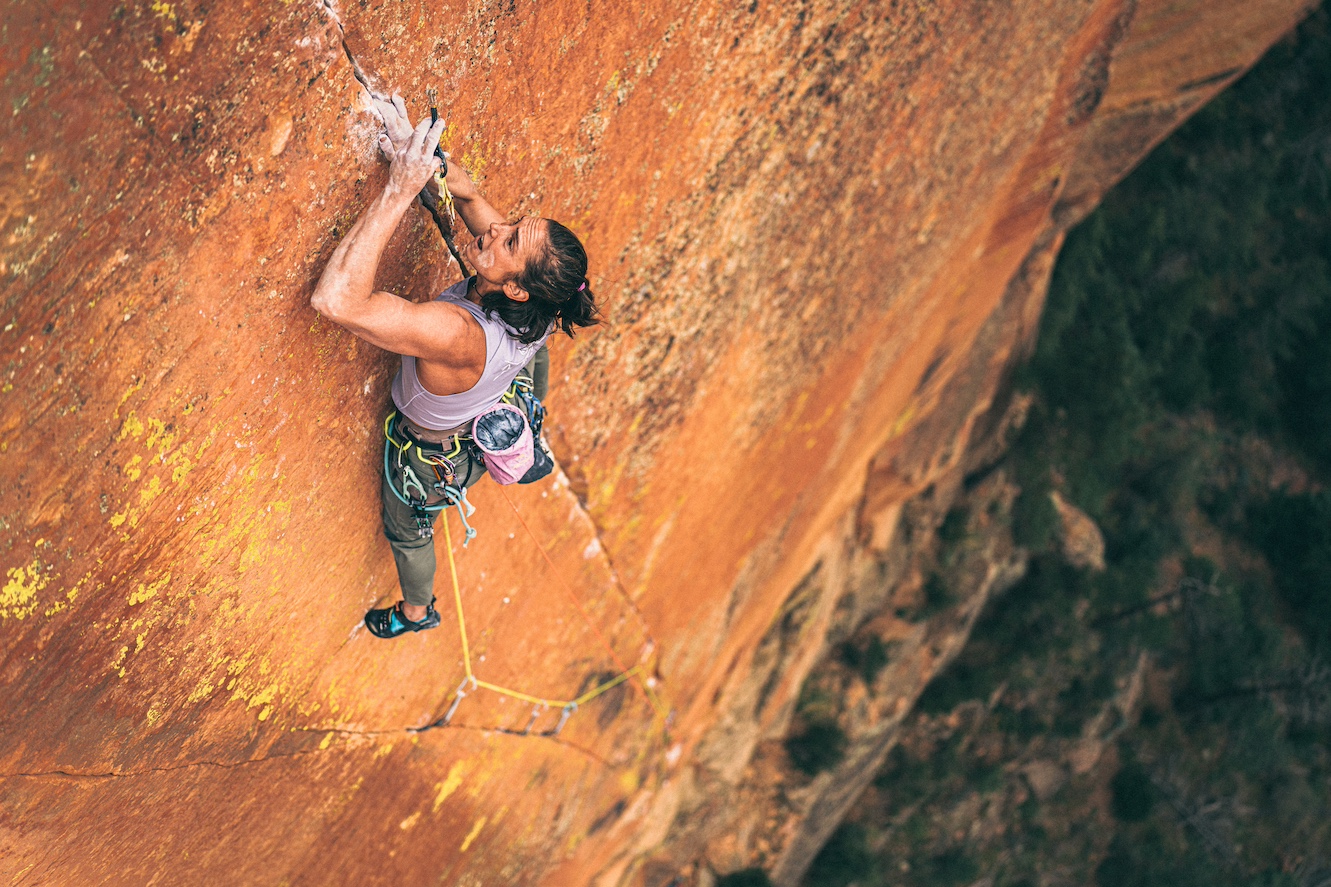
Cat: I think the Book of Hate video also sort of exemplifies to me how relatable you are. Like if I forget what grade that climb is, I'm like, oh yeah, seeing this person try, like show every bit of how hard she's trying. It's so cool and it makes me want to try that hard.
And it makes me want to be like, I don't fucking care what anyone here thinks. I'm going to give it my all.
Amity: Yeah, I think that's the relatable piece is, I'm not up there just like floating climbs. Like I'm not like, I'm freaking giving it.
Yeah, I'm trying really hard.
Jeannie: It's nice that you make a little noise, because, you know, Honnold doesn't make any noise.
Amity: Yeah, I mean, yeah, you watch so many people climb, whatever, 5.14 and make it look super easy. And that's not relatable. But if you watch someone up there, like scared and giving it, you think, yeah, oh, yeah, I could do that.
Jeannie: Well, I will say, I would also add, though, that watching you and hearing you, and then when your foot slipped and you're like, no, no, oh, no, I was, I mean, I loved that. But at the same time, you still can't tell, because you climb it so well and gracefully, you still can't tell how hard it really is, the effort you're really putting in.
Cat: Yeah, it's pretty cool.
Amity: I think climbing is just this really cool way to practice dealing with success and failure that you experience in life. Like every climb you go up is this opportunity to choose how you're going to respond to either success or how you're going to respond to failure. And yeah, I just think it's a cool way to practice being the person that you want to be in the way you respond to those situations.
Jeannie: Can we dive into nutrition for a second?
Amity: Yeah.
Jeannie: I'd be super curious going back to gymnastics. If there were eating issues for you or your team and how you then kind of took to wanting to go into sports nutrition and maybe sharing a little bit of, you know, the more up-to-date thinking that that we need to eat more, not less. And it's a matter of what we eat and when we eat it and...
Amity: Yeah. I feel super fortunate for the coaches and the culture that I grew up with in gymnastics that, like, we were never shamed for weight or eating or whatever. Definitely that, it is a weight-sensitive sport where you're in a super tight little leotard and everyone's looking at you, like, that it's definitely there. There's an awareness of it, but I am super grateful for the coaches and the gym culture that I grew up in, that it wasn't ever a super negative thing for me growing up.
But definitely being in that sport and then moving to climbing, I've just been immersed in these weight-sensitive sports my entire life and seen both the positive and negative side of, yeah, food and weight and body image and all of those things. It's super interesting working with a lot of different climbers in the nutrition space and having those conversations.
Cat: What are some myths about nutrition for athletes that you would like to debunk?
Amity: Yeah, I don't know. The whole nutrition conversation is super interesting in climbing because, there's for sure this culture of ‘lighter is always better’ and you have to be a certain weight to send or blah, blah, blah, whatever. There's definitely that culture.
And at the same time, it's super good we're talking about those things and exposing that now. And at the same time, the pendulum has almost swung too far. I think people are afraid to ask questions of, how does weight impact my performance?
And is there an appropriate time or way to lose weight to achieve this goal? Because it's a tool, right? And at a high level of athletics, you have to use every tool that you have to achieve certain goals.
And wanting to eat a certain way or lose weight isn't any more inherently wrong than wanting to eat a certain way and gain weight or gain muscle. Those are all just tools and resources that we have. And it's learning how to use those appropriately and appropriate times and maintain this overarching or long-term view of health in relation to performance.
But I think it's just such a more nuanced conversation than just saying either, your lightest weight is the best weight, or you can't ask those questions, you have to eat more and just be stronger. And, I don't know, I think there's so much nuance in the middle of that. That's really interesting to talk about.
Jeannie: Yeah, I like that. I mean, it seems like that's what you're doing with your profession now is probably working with someone and their goals and trying to figure out what tools to use and how to use them when. I will ask a little more general question because I think we get obsessed with these trends of like, everybody needs creatine or everybody needs collagen, or everybody needs to eat 200 grams of protein when you're 110 pounds.
For me, because I've always been interested in nutrition and food and have been a competitive athlete forever, the protein thing is the one that I'm always a little baffled by, and I still don't even have it sorted out for myself. If you have any insider thoughts on that targeted toward climbers, it would be interesting to hear.
Amity: Protein is obviously super important for a lot of bodily functions. And in terms of athletics and performance and strength and all of that. What the research, like best research shows us right now is that optimal protein intake for muscle protein synthesis, so like muscle growth and repair, is like 20 to 30 grams of protein every three to four hours. And there's a lot of science behind that.
Jeannie: Just for a sec, that's super interesting to me, because for a little while, I thought that the deal was that protein takes like 12 to 18 hours to actually process in your system and then go to work for you. But maybe that's why you do it more consistently, it used to be we would try to eat the bulk of our protein at night.
Amity: Right. Yeah. So ideally we want to see protein spread throughout the day.
And yeah, I guess a little bit of the science behind that. So protein is made up of 20 different amino acids. Eleven of them are non-essential, meaning your body can make them.
Nine of them are essential amino acids, meaning you have to get them from food. One of those amino acids is called leucine. And leucine is this trigger for muscle protein synthesis.
So again, just the growth and repair. And you have to have a certain threshold of leucine to trigger that muscle protein synthesis. And that's like two to three grams at a time.
So the reasoning behind the 20 to 30 grams is if you're having a high quality protein, meaning something with all the amino acids, you're typically getting that two to three grams of leucine. So that triggers the muscle protein synthesis. And then all of these other amino acids are the building blocks for your muscles to repair themselves.
Like after training or climbing or whatever, so that you have all those building blocks available for growth and repair. The reason, the timing of that then, every three to four hours, it's like flipping on a light, so you trigger that muscle protein synthesis.
It does its work, does its job. And then it has to have this refractory period, where it turns off basically, before you can switch it back on again. So they've done tests of 10 grams every hour, or 20 grams every three hours, or 40 grams.
And that kind of mid-range of 20 to 30 every three to four hours is kind of the optimal amount and window of timing. So yeah, there's a lot of science behind it. But that's kind of why you want to spread throughout the day versus one big serving at night or whatever.
Jeannie: That feels like newer beta.
Cat: And is that 20 to 30 grams, is that regardless of body weight?
Amity: Pretty much. Yeah.
Cat: Okay. Wow. Yeah, so this is super new to me. I had heard the one to two grams per kilo of body weight. Without any guidance as to when throughout the day you should have it.
Amity: Yeah. That is another pretty commonly used way of giving protein recommendations. Yeah.
And then there's a lot to get into if someone is in a calorie deficit and they're trying to lose weight, like keeping protein high at that one gram per pound, because if you're having high protein intake and doing some sort of strength training, you're a lot less likely to lose lean mass or like muscle tissue if you're also losing weight. So, yeah, there's a lot to play around with in that.
Jeannie: Yeah, and especially because, I mean, leucine, I don't know if leucine is in vegetarian versions of protein or if it's only in red meat, I can't remember.
Amity: It is in vegetarian proteins. It can be typically in a lower amount than an animal protein.
Jeannie: Okay. And you're not a vegetarian?
Amity: Not strictly. I don't eat a lot of meat, but I'm not strictly on any particular diet.
Cat: So, I guess I'm curious, because I started eating a lot more meat in the last year, like, you know, due to hearing all these things about protein, and I just couldn't figure out how to get enough protein without most of it being from meat. I'm curious where you get most of yours.
Amity: I do like a lot of Greek yogurt, like at least once a day. I'll do a decent amount of fish. That's pretty common. I guess those are a couple main sources.
Jeannie: That’s a fun profession for you, I would think. I mean, I'm always fascinated, but obviously you live it every day. So it must be super interesting if you can start working with folks and coach them on that.
Amity: Yeah, it's super cool. It's another space that feels like there's a lot of room to empower people. Like, it's super cool to have a conversation with someone of like, yeah, most climbers are coming to me with this mindset of like, I feel like I'm eating too much and I don't know the right weight I should be or how much I should eat or how to like fuel for a day at the crag.
And it's super empowering to be able to like tell them, yeah, let's put in an extra snack. Let's put in the strategy for your crag day or whatever, and then like have them come back a couple of weeks later and say like, yeah, I ate more and I did two more burns on my project and I felt so much better and I recovered faster and I'm not as sore and like my mental space was better because I wasn't dealing with like being low energy and trying to try hard. And it's such an empowering space to see how these small changes and just giving people, the letting them give themselves, give permission to eat more or feel better or have an extra snack if they're feeling hungry instead of having to restrict like it's such a cool way to empower people and then it can be such immediate effects almost.
Cat: Yeah. Is that what you find most people need to hear is that they should add something rather than take away?
Amity: Yeah. A lot of people are coming to me with the mindset of like, I feel like I'm eating too much or I don't know how to fuel strategically or whatever. And it's like almost breaking down that, I don't know.
Helping them understand the demands of the sport and how much energy they are using to be out climbing all day or whatever. And helping them give themselves permission to listen to hunger cues like, I'm hungry, I can eat a banana instead of, oh, I feel like I'm eating too much.
I shouldn't have that. Like that's a big one. And then just the strategy of it, if someone is wanting to go into a really high performance season or phase or super important project where it feels like weight is going to be a limiting factor and maybe they do want to lose a few pounds for this really acute performance phase.
It's then how do we use science to be strategic, still making sure we're fueling your training and climbing sessions super well so that you're high energy for those, you're recovering from those. But then finding these other times of the day or the week where you're less active. And that's where we can create a little calorie deficit to get you to this acute performance weight that you're going to stay at for three weeks and then we're going to cycle you back up.
Jeannie: Was there ever a time where you just were blown away by something that you learned? Like the diet stuff obviously for a lot of us who didn't used to eat at the crag. I mean, I think that's so pivotal now to learn that and understand that eating more during the day and maybe even less for dinner.
I used to go the opposite way, you know?
Amity: Yeah.
Jeannie: But also just in your performance or your life in the last five years, anything that you just went, well, okay, I hadn't thought about that or that just changed the game for me or you know what I mean?
Amity: Yeah. No, I don't know if it's a specific instance. I think a big thing that I've been working on over past years is separating self-worth from climbing performance and how much more fun that makes rock climbing and how much more I'm able to engage with people with the crag because I'm not just sitting here frustrated because I fell on whatever climb or whatever.
I definitely don't always do it perfectly. I think this is a goal that you're always working toward.
Jeannie: I mean, we all are. We all are trying to get out of it. Well, hopefully, a lot of us are trying to get out of our ego, right? And not carry that stuff. Celebrate it, but don't get attached to it.
Amity: Honestly, I think it's been kind of taking a step back and viewing myself in this space as a professional climber. I think just realizing more and more the role that I have in the climbing community and trying to like step outside of myself and view my role in the climbing world.I don't know, this sounds like kind of maybe conceited, but realizing that like people look up to me and just like taking some time to think about how do I want to portray myself?, Or seeing a video of myself fall on a climb and get mad and say a bad word or whatever. That is not how I want to engage with climbing or the people at the crag, or, ugh that's like, kind of gross.
That's not how I want to be. Then consciously making those efforts to change that, but that has to come from not just like, I don't know, that can't be peripheral, that has to be internal of like, actually changing how I feel about myself or my performance or whatever.
Jeannie: First of all, it's not conceited, it's the opposite. I mean, honestly, because a lot of climbers, and I've been in the industry a long time, and you know, from a work standpoint too, it's easy for climbers to read their own press and become kind of a caricature of themselves, in terms of what the press said, who the press says they are. I could not sum up this interview or everything about you and what's inspiring about the climbing community, by saying that you stepping back and actually saying, who do I want to be to all these people, is such a positive evolution.
And knowing who you are yourself, obviously. That's such a great gift. I'm so grateful to you that you're doing that.
Cat: It's also a lot of pressure, like it's a huge burden as a famous climber to have all these people watching you all the time and have all these videos of you out there. And has that been uncomfortable for you at all? Or how do you deal with that?
Amity: Um, it's weird to see videos of myself and all that. But I don't know, I wouldn't say it's uncomfortable, partly because I like what we were saying. Climbing is beautiful.
Like it is this art. And I'm not a particularly creative person or like that artistic, but I see the beauty in climbing and I actually really love working with photographers and videographers who do have that creative mindset. And I think it's a cool collaboration. I want to go do the climbing, you want to do this artistic side.
I think it is a really cool collaboration. So I do think it's fun to make those, like make the art with the photos or the video or whatever.
I think that's a cool way to collaborate with people whose minds work totally differently than mine.
Cat: Yeah. I mean, that's a much more productive way to look at it and think about it, than like the pressure of being on camera often.
Amity: Yeah. And honestly, it's like a lot of times, it's fun to have someone up there shooting because you're when you’re at the rest, instead of being all in your head, you're just chatting with this person.
Jeannie: Yeah. I loved that in your “Book” video. You were just looking over at the camera, like, whoa, that was a big effort.
Amity: You're like, oh, like all I have to do is get up to this next spot where this person's shooting photos and we can have a little conversation. And I don't know, I think it's fun a lot of the time.
Jeannie: I also love what you said earlier, you're kind of just owning the fact that you're a sponsored athlete and people do look up to you. And I hate to generalize, but I will a little bit. I do think it's often true that women tend to downplay our abilities.
And you could be at a crag and be like, no, whatever, I'm not famous. I'm just like you. But that doesn't live up to helping them or being true to yourself.
And so I think it is without ego to say, to own it. Yeah, you're a sponsored athlete. You do inspire a lot of people.
But to look at that and be able to be like, OK, how do I want to inspire them? How do I want to appear to them, to show up for them? You know?
Amity: Yeah, totally. I think for me, it's owning it and owning it. But in the sense of oh, I like made it.
It’s not like I don't have to work hard, like I'm such a good rock climber. Like, I'm never going to feel like that good of a rock climber.
Like, I don't know. That's just not my personality. I'm always going to want to be better and keep striving for improvement in whatever area it is.
But I think you're right. Owning it in the sense of like, I have this ability to empower people and speak a lot of positivity to people of being at the crag and someone comes up and says hi to me. I want to engage with them and ask their name and where they're from and make them feel seen and valued and then cheer for them on their climb and encourage them to try hard.
Jeannie: Well, or even put it this way, I know people who own it in a way that they feel like they always need to teach you something. That they're always going to be, you know, you could meet people at the crag and be like, well, I need to be their mentor. I need to be their example.
You know what I mean? I meet you and you're just with me in terms of being relatable and understanding. You're not talking at me or to me in a different way that's above me.
Thank you, this is awesome. Super fun to have a conversation.
Amity: Yeah, for sure. We can do a Yosemite season follow up.
Cat: Thank you so much for making the time. I know you're busy, busy.
Amity: You guys too. Thanks for all the good questions. It's really good.
I appreciate having to put some thought into the things that I'm doing and have to put words around it. So it's good.
Cat: Thanks so much for listening today. And if you liked what you heard, help us out by leaving us a review on Apple Podcasts or wherever you get your podcasts. Don't forget to check us out at broadbeta.com for recipes, gear reviews, technical tips, and beautiful stories and photos.
Intro and segue music were by Holizna Radio, and the music in the background right now is by Kirk Osamayo. All music was sourced from freemusicarchive.org.