
Cat: 00:00
Welcome to the Broad Beta Podcast. I'm your producer and co-host, Cat Coe.
Jeannie: 00:05
And I'm Jeannie Wall, co-founder of Broad Beta. And today we're excited to share stories of mountain women's adventures and to take a deep dive into how their lives have been transformed by their connection to wildness, both inside and out.
Cat: 00:21
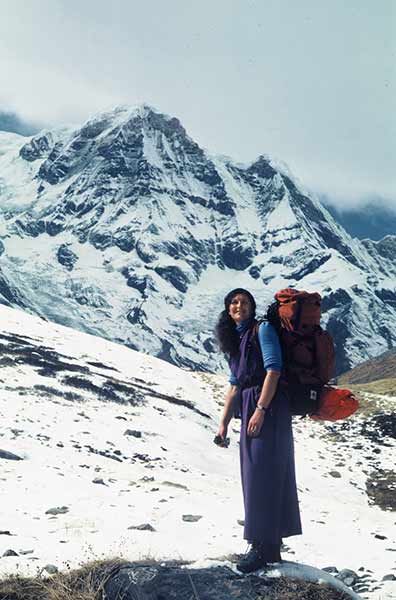
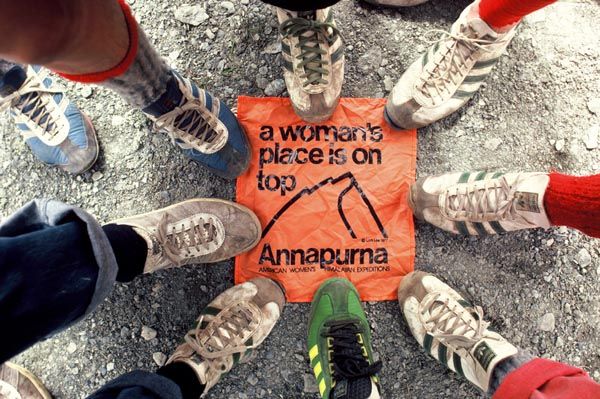
Our guest on today's episode is Arlene Blum. Arlene is a prolific mountaineer, a biophysical chemist, and an author. You might recognize her name from being on the first all-female team to summit Denali in 1970 when women were typically only invited on expeditions to cook at base camp. Or because she organized the first American team, which also happened to be all-female, to climb Annapurna I, widely considered to be one of the most dangerous mountains in the world. Arlene has also broken down barriers in her science career. She founded the Green Science Policy Institute, and she has dedicated her career to reducing the presence of toxic chemicals in everyday items such as children's pajamas and furniture. Without further ado, let's welcome the amazing Arlene Blum. Arlene, I loved Breaking Trail. It was inspiring and heartbreaking, and I just can't wait to ask you a bunch of questions.
Jeannie: 01:28
I read the book as well, Arlene, and I really appreciated it. I appreciated your candidness and your honesty and your yeah, just articulating all of the complexities of climbing at that time and then being a woman climber at that time, and then how your upbringing interwove, you know, itself into your life there.
Arlene: 01:48
Next year is the 20th anniversary of when I wrote Breaking Trail, and we had a 20th anniversary edition for Annapurna. So I don't know how, but I'd love it if this could in some way contribute to people knowing about Breaking Trail.
Cat: 02:02
I read it in like three days. I read it super fast, and I think that says a lot for just how interesting it was.
Arlene: 02:10
I think the younger generation might like to know about it.
Jeannie: 02:14
I think the Broad Beta audience would be really interested in how your upbringing and your challenges in life led to your to your climbing and your drive and your pursuit of mountaineering for its own right, but also you know how that felt as a woman and why you pushed things to happen for for women and women-only expeditions. I definitely want us to get to the other part of your life, which is monumental and inspirational as well, your science.
Arlene: 02:52
So I think I do suffer from acute curiosity and acute optimism. And I always kind of want to know what's over the next peak. Um yes. And it actually helps a lot with my science because I use the same skills that I used in the mountains. Now my knees are not such that I can climb high peaks, but I feel like I get to use the same skills in doing my science of curiosity and optimism, hard-work and risk-taking. I had a very overprotected childhood with my two Orthodox Jewish grandparents who were afraid of everything. Holocaust was never discussed, but I was born in 1945. My father was German Jewish, his family was killed in the Holocaust, and yet it was never mentioned. But I think it was a backdrop. And I remember the people next door who were German Jewish. My grandparents were a little bigoted (and they had numbers tattooed on their arms). My grandparents said, you know, we don't um associate with them, they're refugees. Anyway, so I went from that stifled environment to Reed College in Oregon, and you know, it's just amazing.
But I will say,going back, a really memorable thing was my grandfather, he'd raised four daughters, but he worked in a grocery store, I don't know, 16 hours a day and put his daughters through college during the depression, which was pretty good. You know, all four of his daughters graduated from college. But uh when I came along, he was retired. And I think I have that in Breaking Trail, but it was really important. He taught me how to read all the prayers that only boys are supposed to read. That was really important. And then I just assumed I could read them and I was so good at them. And why didn't I get called on? You know, wave my hand around. And then when I learned that girls weren't supposed to read the prayers, I said, Well, I'm not gonna go to religious school anymore. And he let me. So I felt like I was kind of raised with the idea I could read the prayers, and if somebody said I couldn't, they had a problem. So I never actually was like the angry feminist. I just kind of thought, hmm, they have a problem.
Jeannie: 05:28
Do you think that that just came innately? Or do you have a sense of where that came from? That anything that was a barrier just meant that you had to break down that door
Arlene: 05:44
Well, I think I was taught that I could read the prayers and I was good at them.
So, you know, I think when you're angry, it's when you have a lack of confidence. So I actually had confidence. I was reading the prayers better than those boys and they wouldn't let me. So what's wrong with them?
I went to MIT and that was rough for great, you know, women in those days. So again I left because it just wasn't a hospitable place. But then I was lucky I went to, Reed, a great place for women, Berkeley was too.
Jeannie: 06:14
I think that's important too to think about, you know, there's times where it's like we need to fight and try to break through that stuff that gets in the way. But like there's also times where MIT didn't work for you and you weren't gonna thrive in that kind of environment. And so, moving to a more supportive environment just meant that you would thrive that much more and be able to do more and be more confident with your life, right? I'd love to have you go back and just sort of talk about a little more of your upbringing and how that led you into the mountains.
Arlene: 06:47
Well, I certainly didn’t get to the mountains when I was a kid. I got to go to camp one summer, you know. And it was YMCA camp, which was actually a little uncomfortable for me just because it was very Christian at that time. You know, all the songs and everything about Jesus. I was like, oh my gosh.
Cat: 07:10
I mean, I was raised Christian and it was still uncomfortable for me.
Jeannie: 07:18
It's funny as being Jewish that you were sent to a Christian camp.
Arlene: 07:23
Well, it was just the YMCA. I went to the YMCA for swimming lessons. I had to really work to get to have swimming lessons. I think it's in the book, but I remember by the time I was allowed to have swimming lessons, I was 10, and then I had to be with the tadpoles or something, you know, the little six-year-olds. But I was so determined. They had levels from tadpoles to mermaids or something. And I got through all the levels in a few months because I was super determined. And somehow I persuaded them that I could go to YMCA camp.
And then I was a bit shocked. And I also kept kosher, so I really didn't eat ham or pork and things. I mean, I'm not anymore.
And so there I was, you know, with all the songs about Jesus and ham and pork from the meal. So it was a bit of a surprise. But I loved being out in the woods. And that was as much out in the woods as I had till I went to Reed.
Cat: 08:28
I mean, you talk about it in the book, so I know the story, but can you just tell our listeners the story of your first climb?
Arlene: 08:40
Yeah, so in Portland, Oregon, Mount Hood hangs magically in the sky above Reed College, where I went to college. And my lab partner was a very handsome young man from Portland who was a climber, and we were studying chemistry till like late one night. He said, you know, it's gonna be a great night to climb Mount Hood. Do you want to go? And I'm like, sure. And he gave me this army surplus backpack, that didn't have a waistband, kind of not great and loaded up with stuff.
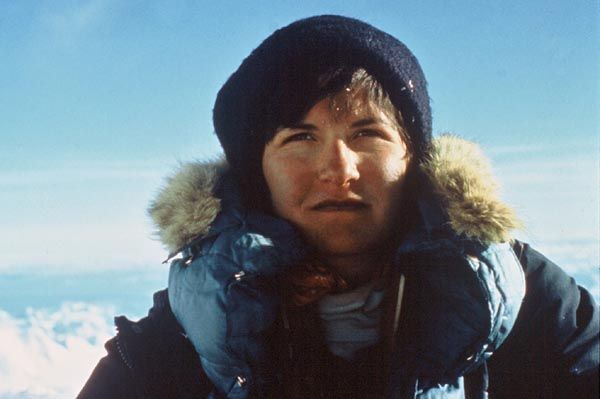
And I remember we went into Timberline Lodge where a few people were still kind of drinking, and then, we headed off. And I was from Chicago and had never done anything, and I was pretty out of shape. And um, you know, we started up the parking lot and it was kind of steep, and I started gasping, and he later told me he didn't think I'd make it out of the parking lot. But you know, I was very determined, he was very handsome. I liked him. So I continued.
The sun rose and I was on the glacier, and it was like a fairyland. It was the most beautiful thing I'd ever seen, the green and blue ice and towers and pinnacles, and I just totally for a moment, you know, like what was it anyway? I just fell in love with mountains. I thought they were the most amazing thing ever.
And then my attempted climb, which I write about, was Mount Adams, where I write now. That was with him and a bunch of guys from Reed who were not experienced. There was one guy who always got altitude sick at about 10,000 feet, and [Mount] Adams is about 12,000, I think. And he figured we go up to 10,000, and the altitude guy would get sick, and then I'd go down with him. And so we got up to 10,000, and the altitude guy got sick, but I had no intention of going down with him. So he went down with the guy who had the altitude problems, leaving me with these three inexperienced people who raced up the mountain, and I couldn't keep up.
I didn't get to the top, but then they came back and they said we had to glissade, and I was like, glissade, and they said, yeah, you just sit down and slow yourself with your ice axe. And at that point, all I had were like thin wool dress pants, and it was like getting dark. So I slid down. It was kind of hard snow with little rocks and pebbles in it, which ended up in my bottom. So it was very inglorious. I ended up on my stomach in the infirmary and carrying like a toilet seat around to classes that I could sit on.
Jeannie: 11:24
Wow, that must have got you a lot of dates, I'm sure.
Arlene: 11:28
Yeah, yeah. You know, quite a bold one. So that was my first climb. But I loved it. I was so happy. I remember lying on my stomach in the infirmary, writing my mother that I'd just been in the most beautiful place ever and I couldn't wait to get back to the mountains. So I was not tired.
Cat: 11:50
Gosh, I think what was like so what stood out to me the most in your book, from your very first experiences climbing, to your experiences with sexism at the different colleges that you went to, to the bigger, higher altitude mountaineering trips, and like some of the treatment that you received from the men there was like you just kept plotting forward. You never stopped doing what you were driven to do. Like nobody seemed to deter you or make you angry. And I just want to know, did you have those feelings of quitting mountaineering, quitting science, quitting quitting all these things because of the people that you came up against? Or was it just never a thought?
Arlene: 12:50
Well, there's both. I mean, first of all, I think I have a little bit of a vision gift, that I see the way I want the world to be, that is better in one way or another. And then I try to find people who share my vision, and then I'm determined to make it a reality. And so most of the trips I did, I organized. And maybe that came from my childhood because I did grow up with three adults who really didn't like each other. And from an early age, very early, I was trying to organize my family for survival, as a little kid. So somehow, in 1970, I saw that women weren't allowed to go on expeditions to Denali. And I knew that women could climb Denali, and so I found other women who wanted to, so I kind of organized that trip. I've had a lot of opposition because I think when you do things that are a little different from what people usually do, you get opposition.
Cat: 13:58
Mm-hmm. Did you ever feel angry at the opposition or did it not phase you?
Arlene: 14:05
Yeah, injustice always is upsetting, whether it's for me or for anyone else. None of us like injustice right now. There's so much injustice around.
Jeannie: 14:16
Can you tell us a little bit more about the Denali experience as your first big expedition that you organized? And obviously there was some opposition and other things that went on there, and just maybe go into that a little bit and where it left you and where you went from there.
Arlene: 14:32
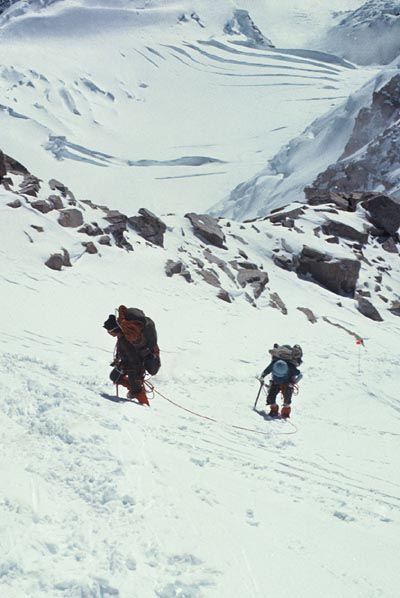
Denali started because some of the guys I climbed with were going on a guided trip to Denali and I wanted to go. And the brochure said women could go as far as base camp to help with the cooking. And I had climbed higher than Denali already in Peru with my friends from Reed, so I knew I could climb to 20,000 feet. And when I called the expedition leader, he said, well, women aren't physically strong enough or emotionally stable enough to climb Denali. And I said, well, I've climbed higher than that in Peru. And he said, well, did you do the hardest leads? And I said, well, no, but I think I did my share. And then I kind of realized as long as I was climbing with all guys, I wouldn't do the hardest leads. And everybody, including me, would kind of wonder, am I doing my share?
So then I thought, well, I wonder if an all-women's team could climb Denali. And it was pretty revolutionary in those days. Like, because one thing is you had to carry, 30 days of food, and food wasn't light. I mean, you had about 200 pounds of gear and nobody had thought of pulling it on sleds. So if you can believe everything was being carried in packs. Wow. And so there was a question, could women carry, you know, we were carrying 60 pounds, and we couldn't even lift it. We would sort of sit down in the snow and hold hands and pull each other to our feet.
Jeannie: 15:56
I hate to say it, but it's kind of still like that. You still have a 60-pound pack, but you also have a 60-pound sled. I mean, it's crazy. It just takes a lot of stuff. But back then you didn't have really good packs and you didn't have sleds, which is insane.
Arlene: 16:17
So each step of the way, it was like, I wonder if women can get permission. I wonder if women can get to Alaska. Each step of the way, I'm like, wow, we're on the glacier. This is amazing. And so it was really exciting because there was such a sense of discovery of ourselves. It was tough carrying those heavy loads.
They took us to The High Altitude at the Institute of Arctic Biology. We were the first women they studied at high altitude. And they took us like the summit of Denali in an altitude chamber. And four of us just did fine. And then Grace and Dana, the two people who had a lot of issues, did not do fine.
Cat: 17:03
This was before your expedition left?
Arlene 17:05
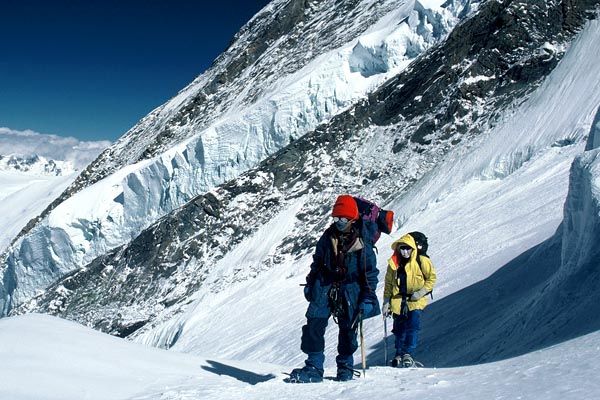
Yeah, we flew to Fairbanks, um, in part because they paid us, I don't know, $300 each, which is what we paid Don Sheldon to fly us in. You know, they'd studied men at altitude a lot, but they'd never studied women before. So it was rough. You know, Grace and Dana were really not friends at all. So, we had them in separate tents usually. Wow. But I and I'd been the peacemaker my whole life as a child, so this was not an uncommon role for me as the peacemaker. And then Grace was the leader, and she really had altitude issues. And when she collapsed unconscious just below the summit, I was like 25 and suddenly I was the leader, and everybody's turning to me for what to do. And I actually turned out to be pretty good in emergencies, but that was one of the first times.
Jeannie: 17:57
That was amazing. That was an amazing rescue, you know, you're strung out.
Arlene: 18:06
Yep, no, we just did it because we had to do it.
Jeannie: 18:08
But it was in a storm, right? It was like starting to storm?
Arlene: 18:10
Faye and I bivouaced with her above Denali Pass, yeah, over 19,000 feet. And I had bunny boots. Do you know what bunny boots are? They're rubber boots, and they keep you warm if you're moving, but if you stop, your feet start to freeze because you get wet socks. I still have my fingers, I did kind of get frostbite on my fingers putting Grace's crampons on her.
Jeannie: 18:39
So you put crampons on your bunny boots.
Arlene: 18:43
Yeah, you had to.
Jeannie: 18:44
Yeah, that's crazy because there weren't any other boots at the time for you.
Arlene: 18:48
Well, there might have been high-altitude boots, but we couldn't afford, you know, the bunny boots worked and they were cheap. Army surplus bunny boots.
Jeannie: 18:55
Yeah, I'm amazed, reading that, it was fairly epic and you got everyone down safely. And I mean, it's kind of a testament, obviously, to your skills and your leading ability. I mean to be such a good leader and take over, but also just that it kind of almost drove you, it feels like, to do more, right? Because you knew you had the skills rather than being afraid.
Arlene: 19:21
Oh, I don't think I thought I have the skills, but I did think, because I'd had really negative messages in my childhood. Remember, my parents were divorced, which in those days was considered shocking, and my father, you know, was a German refugee. I don't know. So I'd had really negative messages, and my mom had mental illness. So I began hearing when I was about four that I'd amount to no good given my parents. So I always had that you're no good message.
I do remember that after we got Graced down to the camp, maybe at 12,000, there was a big storm, and we were there for several days, and we had these big REI orange tents, but you had to go out every two or three hours to take off the snow or they would collapse. So while we're there, keeping the tent from going away. I was thinking, gosh, I'm not such a bad person. I helped save Grace's life. You know, it made me real, it gave me a lot of inner confidence that I was kind of okay. You know, everybody has imposter syndrome and you kind of doubt ourselves. So that really, it really helped give me confidence. And then as you recall, I think it's in the book, Grace was in complete denial that she'd been unconscious. She said she would sue us because we tied the ropes too tight and she got a blood clot. And if we hadn't been hysterical women, we would have given her a good kick and she would have walked down the mountain, you know. Now I just forgot the whole thing because it was so unpleasant.
Jeannie: 20:51
There's a similar story with fairly cutting-edged alpinists who, had a rescue. And that wasn't even at high altitude, but the person came down and blamed their partner who saved their life, you know, for not continuing to go up because they were delusional, right? I mean, and it happens, but it's crazy because you've done this amazing thing and they're blaming you basically.
Arlene: 21:16
Yeah. So I was confused. I just didn't think about it. I think I again I write in my book that there was a a Denali meeting at the Portland Mazamas, I don't know, 20 years later or 30 years, quite a bit later, where I met the chief guide on Denali who said he'd never heard of anybody successfully being brought down from that height on the mountain, including when he had an unconscious person. So I'm like, oh my gosh, we really did something hard. Yeah, that was huge. But we didn't realize it at the time.
Cat: 21:49
So what came after Denali? Did you embrace your role as a leader in the mountains after that trip? What followed?
Arlene: 22:02
You know, I had done a certain amount of climbing before Denali, but yeah, and then my next big trip, which was quite ambitious, and which wasn't that long after, or Denali was 1970. And in 1971, I started the Endless Winter, which was 15 months of climbing around the world that I organized. That blew my mind. And we were so lucky, we did a bunch of first ascents in the Himalayas, we climbed in Afghanistan, and we were just young people in our twenties, and we didn't have much money. Like I'd been a grad student. I lived on Panoramic Hill, which has beautiful views, but I took the room that was like a closet because it was $15 a month less. So I was, you know, saving every penny from my $200 a month salary to do this line.
We did it on very little money, and we would just arrive in a country and figure it out, you know, how to get maps, how to hire porters, how to get food, loads packed. Because we did about 10 expeditions in 10 countries. I think we were pretty successful all the time. Yeah, and I did kind of organize it, and it had the big problem that meanwhile in August of ‘71, my boyfriend, my college roommate, and other friends of mine, everybody went to do a traverse of Logan and St. Elias, which I had to finish my PhD. I was gonna go, but you know, PhD theses are always the leader, so I couldn't go. You know, I found my companions for last winter by just advertising when I gave a talk, saying, does anybody want to go climb mountains for 15 minutes?
Jeannie: 23:46
That was crazy.
Arlene: 23:48
And so that's how I found my companions. And one young person who I found that way, he was waiting for me to finish my thesis, so he went off to Logan and St. Elias, and they all climbed Logan. And then they all died in an avalanche on St. Elias, except he didn't. And when the avalanche stopped, the rope just went into the snow where everybody else was. So that's who I went around the world with. And it turns out he really wasn't as strong as he should have been. I was pretty unhappy, you know, because my friends died in August and the endless winter started that December with him. So that was rough. But I persisted in wanting to do the trip nonetheless.
Jeannie: 24:33
Like Kat said earlier, not much deters you from when you set a goal. And I don't know if you can describe sort of how you just roll through those in a way or keep the confidence to keep going and just the motivation, right? Just that amount of travel alone on such a low budget in today's world, people would be like, nah, maybe not.
Arlene: 24:55
We were young, you know, I was 25. Yeah. So you have a lot of energy.
Cat: 25:02
How did you deal with the grief during that trip? Like how did you hold that and continue with climbing?
Arlene: 25:12
Well, I think climbing was really helpful. You know, it's like a meditation. I've never been a good meditator. I fall asleep, but climbing is like a meditation, you know, where you put your foot and your hand determines if you live or die, you're focused or in the present. So the climbing took my mind off the grief. And and you know, and I was with other people who wanted to do, you know, we all shared a goal.
Jeannie: 25:36
I feel like sometimes people go either way, you know, they either go into climbing when something like that happens and it keeps you focused, and or you know, something tragic happens in the world of climbing and you wonder why you're doing it, or you're afraid it could happen to you. That's the acute optimism, right?
Cat: 25:57
Definitely. Can you talk, Arlene, about how you were living in both a men's and a women's world, especially in the time that you were going to these colleges and pursuing high altitude mountaineering, like what your experience was like living in a man's world that way, but identifying as a woman.
Arlene: 26:25
You know, it was kind of rough. There were four women in my first year chemistry grad program, and we all did leave at the end of the first year. MIT was a very inhospitable place for women. And then Berkeley was fine. I shared a house with three women grad students. You know, we're all kind of in the microcosm of our own world and our own life, and we just kind of go ahead. I think as a scientist, I didn't feel particularly discriminated against for being a woman, though there weren't women professor role models. And in the world of climbing, as long as I organized my own trips, it was fine. But when I applied to go on trips, it was less fine. Or, you know, when we needed our permit for Annapurna, that was kind of rough. But ultimately we got it.
Cat: 27:20
I'm curious too about when you stepped away from high-altitude mountaineering and if that was a conscious decision or if it felt like sort of the natural evolution in your life to stop doing as much high-altitude mountaineering and do more trekking and focus more on science?
Arlene: 27:39
Well, it's because I became a mom. I remember when I was pregnant, someone invited me to go to whatever the highest peak in Antarctica, whatever that is. And I said, uh, I don't think so, but maybe in three years. And it's funny, I had a whole set of altitude tents in Nepal with a great guy. And I said, I don't think I'll use them for three years. Somehow I thought that when my child was three, I would go back to all those things, but I didn't. Once I was a mom, I didn't really want to do anything life-threatening, you know. And some women feel that way, some women don't. I mean, women get criticized.
Alison Hargraves, who you've probably heard of, she got criticized for doing hard climbing being a mom. But you know, all these guys go hard climbing when they're dads, and nobody criticizes them. So I think for women, it's their choice.
But anyway, once I was a mom, I did not want to risk my life. Yeah, but we did lots of adventures all over the world. You know, I would figure out what was appropriate for her age. So we did many treks in Nepal and Africa. Anyway, we traveled all over the world doing adventures. So we're kid appropriate, you know, that we also lived in many places. I wanted her to be bilingual, so we lived in third grade in Costa Rica. I found different kinds of adventures that were child-appropriate.
And then when she started college, I found my current adventure, which is making the world healthier with less toxic chemicals, which I like to say is quite similar to a big mountain. So now you have a summit, whether it's a physical summit or a healthier world, and you have to find a team who share your desire to reach the summit, and you have to raise money and buy supplies and pack up heavy loads and then plod. You know, it's not that glamorous, it's mostly hard work, hard work, and then there are storms along the way and avalanches and yetis pop out, and you just kind of have to keep going. And you also need to know when you need to turn back to save your life. You know, when do you push through to the summit and when is it just too hard and dangerous?
So I think it's kind of similar. I like what I'm doing now, and I feel very fortunate to have found this and to certainly have enough successes to seem amazing. You know, that we really have done a lot of things to make the whole world healthier, and that's such a privilege.
Cat: 30:06
Yeah. Can you talk more about some of the specifics of that? Um, some of your accomplishments and how you've made the world safer and maybe talk about children's pajamas, which started in the mountains.
Arlene: 30:24
I was climbing in India a 7,000 meter peak called Trasoul with Bruce Carson, who was at that point America's leading young rock climber. He'd pioneered climbing the big walls in Yosemite without pitons. Until Bruce, everybody thought you had to use pitons, and he developed chalks so that you could not have to hurt the rock. And yeah, he led people like Yvonne Chinard and Royal Robbins up the first grade sixes in the valley.
But anyway, we climbed this peak and there was a cornice on the summit, which means snow over air. And Bruce, who's usually very cautious, unroped and went over to investigate this other summit and fell. We didn't know there was a 5,000-foot vertical face there because we didn't have maps. I was pretty depressed at his death and uh wanted to do something in his memory and learned about the flame retardants in kids' pajamas, which seemed like a really bad thing in those days. All the kids in America pretty much were wearing flame retardants that were five percent by weight a cancer-causing toxic chemical.
Cat: 31:32
Was that intentional to keep children safe?
Arlene: 31:43
Yes. It was. It came from a good place. Indeed, the person who was the activist for the adding the flame retardants to the pajamas, Andrew McGuire, when he learned about how harmful the chemicals were, he turned around and helped us change things. Nice.
Jeannie: 32:02
It was also in tents, remember?
Arlene: 32:04
Well, I know. I wrote about that in the 70s, and it's still, we just got level legislation passed a couple years ago in California, and we still have to pass New York.
Jeannie: 32:14
Yeah, I mean, it's funny because it's ironic that we couldn't sell tents in California because they didn't have the flame retardancy.
Arlene: 32:21
California had laws that you had to have it on there, like a lot of places did: Canada, and a number of states. The outdoor industry has a lawyer who's been slowly chipping away state by state. But for California, we kind of help make it happen to stop changing the law in California. And apparently New York is the last one and he's working on it. Neil Cohn is the attorney working on it. Neil did find that I wrote in Summit in 1978 about how you don't need flame retardants in mountain tents.
Jeannie: 32:57
Is my memory incorrect? Weren't you working in a lab and someone was working on that and you kind of decided that that was what you would put your energy into?
Arlene: 33:09
No, what happened is I was walking the streets in Mumbai, which was then Bombay, where there are so many sleeping people and deciding I'll devote my life to the world population problem. And then I came back, I was at Stanford, and there was somebody named Carl Giraffe, who's a professor who'd first synthesized oral contraceptives, and he had a class on birth control for Stanford students. And I took, you know, I was a postdoc, but I kind of audited the class and I said, I want to help do something in the memory of, you know, Bruce Carson who had died. And he said, Well, Depo Provera is an injectable contraceptive once every three months. It's really useful in developing countries, but there was a concern that it's cancer causing, right? So then I said, Oh, I know somebody who has a screening tool for cancer who was on my PhD committee. And so then I went to see him about testing for Depovera, and he said, yeah, but look at children's sleepwear. And so that's how it was.
Jeannie: 34:09
That was it. Yeah, I like to see how that all came to be for you and just the right path.
Arlene: 34:15
He died not too long ago, and I went to his memorial, Bruce, the professor, and there are all these, you know, fancy professors from Harvard who'd gotten their doctorates with him, and several of them about my generation, one of them said he just wanted us all to work on these flame retardant pajamas, and we dodged the bullet, and I thought I got the bullet, and I'm glad. But you know, it did seem: weird flame retardants and pajamas.
Cat: 34:45
Are flame retardants banned from children's pajamas at this point?
Arlene: 34:53
There were certain bad flame retardants that stopped being used in ‘76. The thing then is we wrote papers, we communicate them, and we use them to affect change. Most scientists write papers, but they don't necessarily communicate them, use them for change. And so I learned that from this professor because we wrote the paper, and then the next week we were on Good Morning America, the Today Show, and CBS Morning News, which everybody in America watched, the three morning shows. And so every parent in America knew. And then three months later it was changed. And you know, if everybody watches the same media, you can see how much better the world could be than the way it is now, you know, where there's such separate realities about what's going on in the world.
So, in any case, that was banned in three months. And little did I know that it continued to be used in furniture and in cars. And you know, when I came back to science, I took 26 years off from science in 1980 when Reagan became president. He kind of did what Trump did. I mean, he took people's grants away, he fired the good scientists, he took the solar panels off the White House, you know, he just went out of his way to do everything he could to harm our health and environment.
And I thought, oh, I think I'll go walk across the Himalayas, you know, until this crazy guy stops being president. So that was 1980. I walked across the Himalayas from 1981 to ‘82, which was a wonderful year. But I didn't go back. And then, you know, I met my daughter's father and ended up raising her. So when she was starting college, which was 2006, I wanted to go back to science. And I thought I haven't done science for 26 years. Maybe I can get a job washing test tubes in a lab. And I went to a green chemistry meeting and met a guy from the foam industry and learned that the same things that we'd gotten out of kids' pajamas was back in everybody's furniture and children's products. So that brought me right back. And during that 26 years, nothing much had happened around flame retardants. So I had a lot of energy having had 26 years to be a mom and have adventures. That was 2006, and so now it's almost 20 years.
Getting flame retardants not required in furniture, it was three months for kids' pajamas, and it took from 2006 till 2013, seven years. And at one point, I was working for free in the beginning. I didn't have an organization, and we were trying to pass a regulation to change the furniture standard so you did not need flame retardants and you could actually have more fire safety. It's by stopping fires before they reach the foam, which is really flammable.
When you make the foam, 5% of toxic chemical, it doesn't really do much good because that only just protects against something like a candle flame for a few seconds. And by the time the fabric burns, you have a big flame. In any case, it was a bad standard and it took seven years to solve it.
Along the way, I was working for free and a journalist documented that chemical producers had spent $23 million on the other side opposing in Sacramento. Very unpleasant.
Cat: 38:30
My God. So is that when you started the Green Science Policy Institute?
Arlene: 38:35
2008, yeah.
Jeannie: 38:37
A testament to your optimism. I mean, let alone, you know, curiosity, but that you just kept pursuing and kept persevering and you know, to make something happen. In today's world it feels like we can't make a difference as an individual, and to go after something like that feels just hopeless. And I love, you know, just hearing you recount the story because it's a great reminder that I mean there's always tough times, and there's probably always something, if we're if we're determined enough, we can get it done.
Arlene: 39:13
We have four major projects right now, all of which are being successful. I mean moving slowly. But the same chemical that was in the pajamas and the furniture is in everyone's cars. And we're trying to change the car standard. We actually it's you know, it's right now in DC is really, really hard, but we actually have support on both sides of the aisle from Democrats and Republicans. Republicans because we're partnered with Consumer Reports and the International Association of Firefighters, and the firefighters have lots of Republican allies. And so when we go to DC, the firefighters make the appointments with the Republicans and join us. So I'm quite pleased that we do have you need that support on both sides of the aisle.
Jeannie: 40:00
So just to clarify in the cars, they put it in there so that your car doesn't catch on fire and burn you in the car, right?
Arlene: 40:11
Yes. And the law was passed in 1972 when a lot of people smoked. Nobody really smokes much anymore in their cars. And usually almost all car fires are either fuel tank exploding or a lithium ion battery running away. And the flame retardants, again, they protect against the small flame for a few seconds. So they're useless. But nonetheless, the law was passed. There's no data to show a fire safety benefit, but it's the same carcinogen neurotoxin that. We looked at 100 cars from 22 brands, all the brands, they all have it.
Jeannie: 40:50
And that does that off-gas continually or just when you buy the car for a little while?
Arlene: 40:58
You should open your windows when you get in the car and not recircle the air, give you lots of fresh air, and reduce your exposure.
Yeah, we might make a little progress. We'll see. We have a bunch of hard projects, but they're all moving forward in spite of it all.
Cat: 41:16
I'm really glad that I'm able to ride my bike to work. Yeah, like I'm spending less time in my car. At this moment, I’m really happy about it.
Arlene: 41:26
Much better when you get exercise instead of having stress driving.
Cat: 41:30
Right.
Jeannie: 41:32
Yeah. I feel like leaving this interview with just what you mentioned in the beginning of this idea that you just have this vision and you know you see it pretty clearly and you go after it. Because I don't know too many people who've done all of what you've done. But also just the perseverance and the clarity of what you wanted in life and went after despite a lot of obstacles and challenges.
Arlene: 42:01
Yeah, and maybe that is. I had a lot in my childhood. A tough childhood can go either way, right? And if you can kind of so I just learned to persevere, like getting to take swimming lessons when I was 10 was maybe as hard as organizing Denali, right? You know what I mean? You just learn to push through. So I do, but then there's a price when you do things that are a bit different than what other people do.
Cat: 42:31
Well, thank you so much. Gosh, there's so much there.
Arlene: 42:37
Somewhere if you want. I actually have four websites.
Cat: 42:40
Oh, you do? I only found arleneblum.com.
Arlene: 42:44
Okay, well, that's a personal one. Greensciencepolicy.org. Then we have um PFAS Central. PFAS is a really bad chemical that's being studied by many, many people. We started studying it in 2013 and with scientists. They were the only people who knew about it then. The first Wednesday of the month since 2013, that's today, we have an hour and a half call with what's now a list of several hundred scientists all over the world who study PFAS. And PFAS Central, we update it every week with the most recent news, science, policy jobs. Then another favorite is sixclasses.org, S-I-X-C-L-A-S-S-E-S.org, where we talk about six families that contain most of the harmful chemicals and everyday products and how to reduce your exposure for a healthier world. And so that one is really appreciated by green builders, designers, architects who want to create healthy environments and they're not chemists. Thinking about whole classes is a way to make better decisions.
Cat: 44:06
All of the websites that Arlene just mentioned are listed in the show notes with links, so check those out. Learn how you and your family can reduce your exposure to these toxins. Also, I highly recommend reading Breaking Trail, Arlene's memoir that we referenced several times during this interview. I really couldn't put it down. It was awesome.
Alright, thank you so much, Arlene, for joining us and telling your story. And thank you to the listeners for tuning in. Find more of our episodes on our website at broadbeta.com, along with stories, recipes, gear reviews, and beautiful photos. If you're interested in supporting Broad Beta, please reach out at admin at broadbeta.com. We'd love to hear from you. Intro music in today's episode was by Holizna Radio, and music in the background right now is by Kirk Osamayo. All music was sourced from FreemusicArchive.org.