
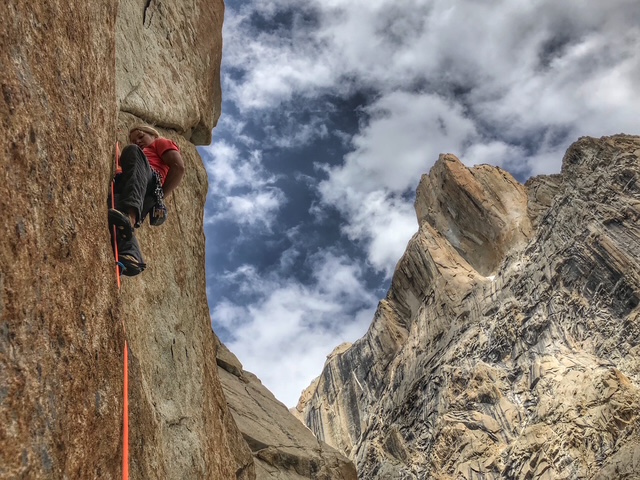
Cat: Welcome to the Broad Beta Podcast. I'm your producer and co-host, Cat Coe.
Jeannie: And I'm Jeannie Wall, co-founder of Broad Beta. And today we're excited to share stories of mountain women's adventures and to take a deep dive into how their lives have been transformed by their connection to wildness, both inside and out.
Cat: Our guest on today’s episode is Anna Pfaff. Anna is a world-renowned alpinist, expedition climber, motivational speaker, and nurse.
Anna has made a name for herself putting up impressive first ascents throughout the world from Pakistan in the Himalayas to Patagonia and Alaska.
In 2022 she endured a life-changing frostbite injury during an expedition to Alaska. Through this injury and her recovery, Anna rediscovered her pure love for climbing. Now, 4 years later, she continues to push her limits–and the limits of the sport–in rock, snow and ice. So without further ado, let’s welcome Anna Pfaff.
Cat: Anna, let’s just start with how you ended up in Denver coming from rural Ohio and how you ended up getting into climbing from there?
Anna: So I grew up in a pretty rural town of Medina, Ohio. It's in northeastern Ohio. And I grew up kind of doing the quintessential Midwestern sports. A lot of softball, a lot of soccer, a lot of track and field, those kind of like team sports.
And then I was really involved with 4-H, like showing cows at the fair and doing that, those kinds of things. And yeah, and then for my junior and senior year, senior year of high school, I went to a vocational school. I went for a healthcare program. And I ended up finding a liking for nursing. I didn't have anyone in my family that was in the medical profession, but somehow I was like, I want to be a nurse. So I finished that program and ended up going to the community college and got my associate degree in nursing. And I graduated at a pretty young age. I had my full associate degree RN when I was 20.
And that really gave me a ticket to get out of Ohio. Not that anything was bad there. I had a really awesome childhood–everything was great. I just knew that there was something else out there. I just didn't know what it was yet.
And one of the girls in my nursing program, her father lived in Denver. And she was like: All right, when we finish the nursing program, we're gonna go work in Denver. It's gonna be awesome. Denver's so cool.
So I'm like, all right, sweet. I went ahead and rented an apartment. I'd found a job at Denver Health that would take new grads, had it all set up, and she was gonna come with me.
I don't remember the exact time frame. It was like maybe a month or two before we were supposed to leave. She got this new boyfriend and then didn't want to leave. And I was like, well, I'm going. I started working at the hospital at Denver Health. And that's kind of like what took me to Denver. At that time, I didn't know what climbing was. And I was working in the hospital, and then I started taking some college courses at CU Denver to try to get my associate’s or my bachelor's degree in nursing.
That's when these kids in my English class were like, hey, do you wanna go climbing with us or camping? And I was like, sure, I didn't know what climbing was, but I was gonna tag along and just go hang out to this place called Indian Creek, which I had no idea what it was, and just packed all the stuff in the car. And, you know, I was really just going to hang out and just, you know, do whatever. And then that trip just changed my whole life, but it was totally unexpected.

I remember camping and everyone was climbing, and I remember the community really brought me in because I didn't have anything. I didn't have a harness or climbing shoes, and they, yeah, they taped up my hands and put me on a crack, and I like made my way up it, and everyone got really excited.
That's when I came back and I was like, wow, this climbing thing is really cool and I want to learn more about it. And then that's when I started realizing that a lot of the other healthcare professionals that I worked with in the hospital, like doctors and nurses, a lot of them were into climbing. So I just kind of stuck with them and we would get out on our days off. And just that's kind of how I got into it.
But it was definitely later in my life. I mean, all that was in my early 20s: 22, 23 kind of era.
Cat: Yeah. I can so relate to your journey. I'm a nurse too, and um just the combination of climbing and nursing is it's a pretty good combo. It's nice because it's flexible enough to go do the thing, but you also make decent enough money to also go do the thing.
Anna: Oh my gosh, it was great for me at the time because I was young, I had no responsibilities. I remember getting my first paycheck from nursing, and I was just like, oh my god, what am I gonna do with all this money? I had never seen that much money in my possession ever. Yeah. It was awesome, right? Because I was just like renting an apartment in Denver. It was a studio apartment off of Colfax, East Colfax, and it was like $500 a month with all utilities included. And yeah, so I just had that ability to work and make money and then you know, kind of pour all that into climbing.
Cat: Yeah. So something that really strikes me about your story with nursing is I mean, you must have been very goal-driven your entire life. Like, I didn't go to nursing school and get serious and you know, get the real job until my early 30s. And the people that I know that became nurses when they were like 20, I'm just like, wow, I can't believe you were focused enough to get the nursing degree and mature enough to work as a nurse in your early 20s. There's so much that you see and manage and deal with as a nurse that it just requires a lot of maturity and a lot of ability to manage stress. So it says a lot to me about who you are. Like before you even became a climber, you were building these skills that help with climbing, and you were already incredibly focused at a young age.
Anna: Totally. And I don't, you know, I mean, honestly, I don't know how all of that happened. I just knew I wanted to be a nurse, and I was super young when I started nursing. I mean, I remember I remember patients even being like, you're not taking care of me, you're way too young. And I would have to go get the charge nurse, and they would have to swap me out for a different patient. But I was 22.
Cat: Are you kind of short? Are you kind of small?
Anna: Yeah, and I was even smaller. I was super tiny then.I was just a skinny little kid. And I that's totally fair. Like,I'm scared too.
And in those early days, I was working on a Med-Surg floor, but then we were also doing inpatient chemotherapy, like an oncology ward. And I did that for a few months, but I quickly realized that my maturity level and my ability to really care for patients on a more emotional side had not developed yet. So I stepped away from that pretty quickly. I was just like, wow, this is a little too much for me right now. And then I started working in the trauma ICU, which was a little more intense, I guess, in a way, but a little less emotionally involved than an oncology unit.
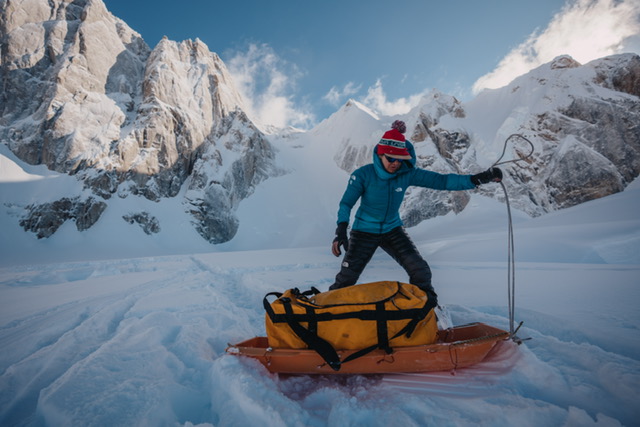
Cat: Yeah, like more technically intense.
Anna: Yeah, more technically intense, exactly.
Jeannie: Okay, my niece is an ER doc, just a funny story. And she was really young when she became a doctor, and she looks really young still at your age. And she has the story of walking into this patient’s room, the patient was an older woman, and she just broke down crying. She looked at my niece and she's like, You're my doctor, and Allie's like, Yes, and she goes, but you're just a baby!
Anna: Yeah, oh, totally. That would happen to me. I remember some guy yelling at me, like, did you buy your nursing license off the internet?
Yeah, yeah. But I mean, that's the beauty with nursing, right? Is that there's so many different disciplines within the discipline that you can move in and out of different, different types of nursing. And, you know, then eventually I found my love for doing ER trauma nursing. Like you were saying, I did start doing all of that pretty young. And I don't know why the path led me there, but then it eventually led me to climbing as well.
Jeannie: And then you got into travel nursing. How did that come because of climbing, or did climbing come with becoming a travel nurse? Because I remember you ended up in San Fran, and it was sort of a travel nurse thing, although you seem to go back there a lot.
Anna: Gosh, you're really racking my brain…how did I even end up doing that? I remember I was working in Denver Health ICU in the medical ICU, and I wanted to do a climbing trip somewhere.
I was stacking up all the shifts. I did 20 shifts in a row had worked all this overtime. I was gonna take all that money and I quit my nursing job. I quit and I was like, I'm gonna go on the road. That's when I met people that were living in a van, although vans weren't as prevalent at that time, they were living in a car and with a tent, you know. And I was like, I want to, that's so cool. They have so much time to go climbing.
I had kind of gotten on the circuit of: Squamish, Yosemite, Joshua Tree. I was kind of following that trad climbing circuit in those days. And I remember I landed in Joshua Tree, and I don't remember exactly how I got that gig, but I think they were looking for nurses, but they wanted me to apply through a travel nurse contract, and I ended up doing a travel nurse contract in Joshua Tree. I was living in the campground, and I would go from the campground and work shifts in the ER.
At that time, it was small, it was a six-bed ER, something like that. Yeah, there's a full hospital with like inpatient. And that's how I learned about travel nursing. And then I completed that contract, and then you know, travel nursing just really fit with my lifestyle because a lot of those contracts are three months, and then you can take as much time off in between as you want, and then pick up another three-month contract.
So that was a dream for me, right? Because I would make those three months of nurse work last for like six months at a time. Yeah. And I would choose my travel nurse contracts in climbing locations. So I did a handful in Joshua Tree, I've done a handful in Las Vegas, I've done a fair bit in California, in Oakland, California, because then I could go climb in Yosemite. Bakersfield, California. I did a few in Boulder area.
So I would always try to base it around a climbing location or somewhere that I wanted to be. So it was, but definitely I was starting to climb more and figure out how to work to where it was more like uh strategically planned around climbing. And then I started doing expeditions. So I knew that I had to work like a contract before I could do an expedition to pay for it and get all of that funding going.
Jeannie: On that, it sounds like you did a lot of rock climbing. How did you get introduced to alpine climbing? And then how did that kind of evolve into you thinking about trips for yourself and yourself with women partners? When did that come about?
Anna: I was kind of on that circuit of like Squamish, Yosemite, Joshua Tree, trad climbing. And at that time in Yosemite, I felt like everyone was, or not everyone, but most of the climbers would talk about the Yosemite season and then they would go to Patagonia. And it took me a few years before I was like, wow, maybe I could go to Patagonia too.
My good friend from Yosemite, this woman Jean Reddle, who was a big mentor in my early days of climbing and really believed in me when I was unsure of what I was doing. She would always just tell me, make sure that you're tied in. Like whatever we're doing. We did like our first El Cap root together, or my first El Cap root together, we did seven days on the Salathe wall. I had never climbed before, it was awesome.
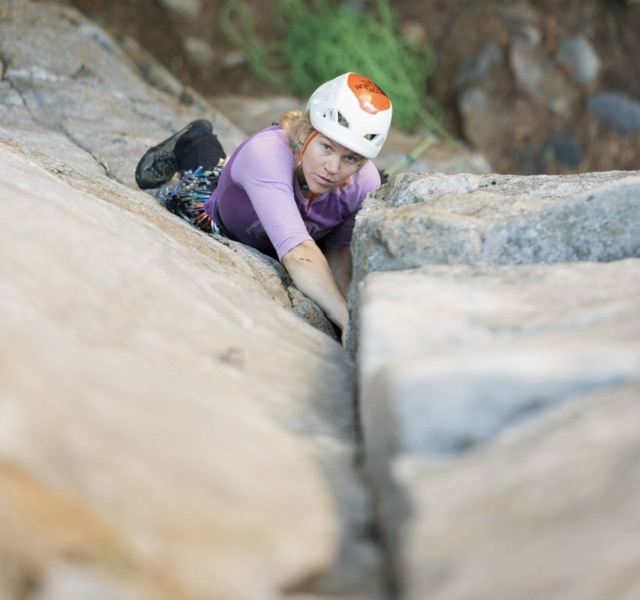
I just remember her saying, whatever happens, just make sure that you're tied in amidst the entire junk show that's going on up here. And then we did a fair bit of free climbing, and then that winter of this was probably 2007, somewhere around that timeframe, um, we teamed up to go to Patagonia together. So we went down to Patagonia, and it was a a great time. Great learning experience, learned a ton.
One thing that I quickly realized is that because I was solely a rock climber at that time, anytime I saw any snow or ice, no matter what degree of difficulty it was, I was just like, oh my gosh, I don't know what to do. I don't know what to do with this. And then after that Patagonia season, I came back and I was like, I really would love to learn how to ice climb. But it was solely for the reasoning at that time of being able to access these, you know, Patagonian granite spires that I wanted to climb. I really wanted to climb Fitzroy, I really wanted to climb Poincenot. And there's a very low degree of ice and mixed and snow climbing that you need to do. But at that time I just was terrified of all of it.
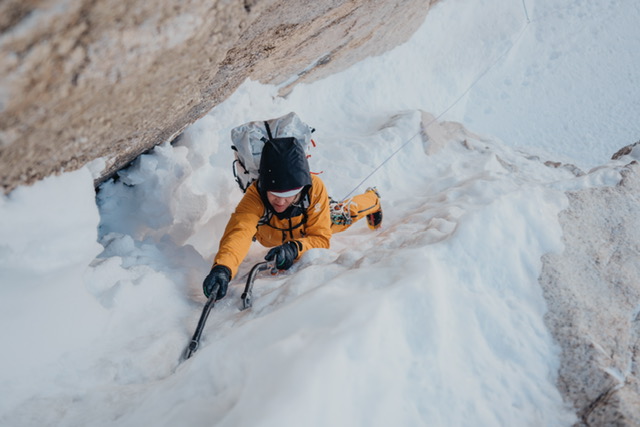
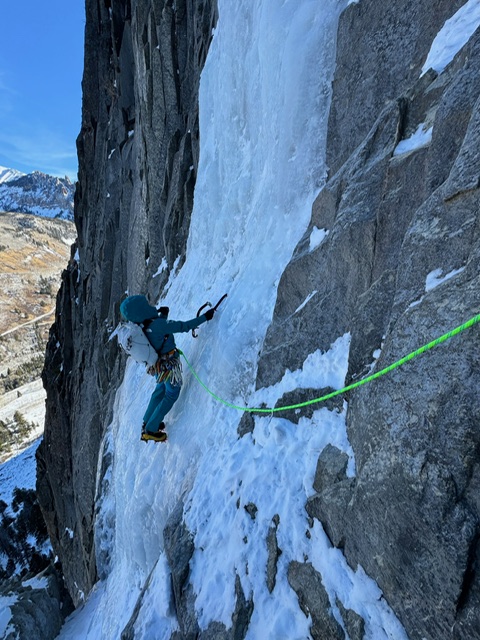
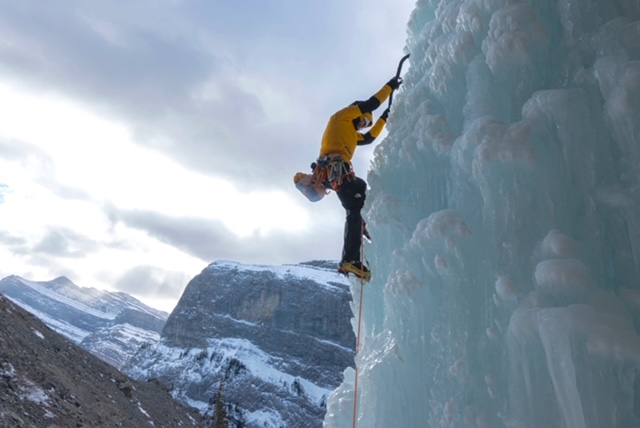
Then I came back and that following winter I ended up spending here in Ouray, Colorado, and learning how to climb in the ice park. So that's how I got into alpine climbing and ice climbing and was more for the ability to rock climb on these spires that I really, you know, I felt an affinity for and wanted to try and climb.
Cat: So interesting. That reminds me just like hearing that your first season in Patagonia was 2007 or thereabouts, which is almost 20 years ago now…
Anna: It's so crazy. Time goes by so fast. I'm like, oh my god, I was so young, right?
Cat:
I just this morning listened to the episode on The Cutting Edge about your first ascent on Mount Providence. And I thought it was so cute. Andres referred to you as like the Swiss army knife of climbing.
Anna: Oh, that's awesome.
Cat: Yeah, like he said that you're just so versatile and that the depth and breadth of your experience is so vast that you can really adapt to so many different types of terrain and environments because of that experience. And it makes a lot of sense knowing that yeah, I mean, 20 years ago was your first trip to Patagonia.
Anna: Yeah, and the seven days spent on the Salathe, I think all that stuff just adds up, not only like different places that we spend climbing, but the different types of climbing. And you know, there's of course some styles of climbing that I prefer to do more than other styles, but I think to really do well and succeed, especially in exploratory alpine climbing, it's really nice to have this broad skill set. And I mean, I'm not perfect at all of it by any means. Like I'm a very slow aid climber, but I know how to do it if I have to do it. And I think it's good to have those skill sets and have a broad range of tricks that you can pull out when you need to. And it keeps it interesting too, right? Switching it up.
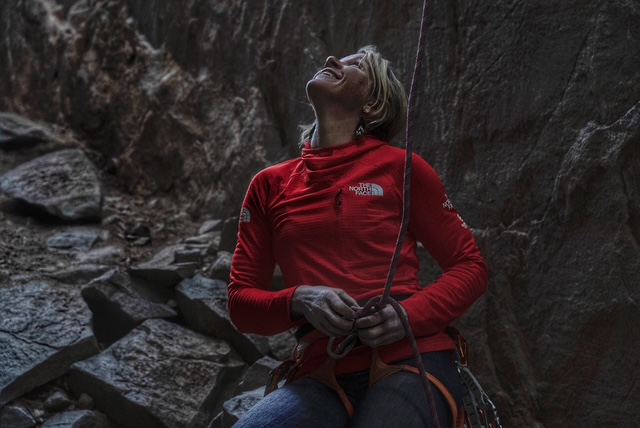
Cat: Totally, adding more and more tools to your tool belt and then refining those and spending seasons on one or the other, or that reminds me, I wanted to ask you about, looking at your website, you have some of the most desirable partnerships and sponsorships in the outdoor industry. And I think that speaks not only to your versatility and your talent as a climber, but also probably to your appeal as a teammate and potentially to your business sense. So can you speak to how climbing has become a career for you and how maybe those things have played into it, like the business sense and and the sportsmanship maybe that have helped you make those partnerships? Because we all know those people that climb 5.13 but are not necessarily like great role models or great business people, and yeah.
Jeannie: I would add two things to that, Cat. Part of it I think is you're just an incredibly approachable, personable, easygoing person, which I think I would imagine has lent itself well, you know, to all of your relationships with your sponsors. I think how you interact with everyone around you is really, I don't know, it's really important to me. And I just find that really warming and inspiring. So that contributes, I'm sure. But the trajectory of sort of did you go after sponsors or did it just kind of fall in line? And we kind of left off at Patagonia, but then how did that morph into actual alpine climbing in Asia and other things? Where did the sponsorship trickle into that with your life?
Anna: Yeah, thanks for that, Jeannie. I appreciate it. I'll try to answer that without going, I think I know what you're asking, and I'll try to answer it without going all over the place. So after, yeah, so after the Patagonia trip, and I had multiple Patagonia trips, like I kind of got psyched on climbing Patagonia and would go back each season.
I don't know if I went every year, but from 2007 on. I don't remember the exact details of how it all went down, but I got invited to go on a trip to the Miyar Valley, India, which is up in the northern India region. And I of course said yes. I didn't really know what I was doing or getting into, but I was like, well, it sounds like it'll be fun. And, you know, I just said yes, and I was like, I'm gonna do it. So I went on that trip and we ended up being able to put up some new routes in the in the Miyar Valley. I didn't go into that trip being like, I'm gonna put up new routes and like I'm gonna do these things. I just didn't know. I had no idea. I had had a fair bit of climbing experience by that time. I'd had some seasons in Yosemite and a few seasons in Patagonia, and felt like I was competent enough to at least go climbing. So that's what I did.
Jeannie: Was that a mixed group of guys and friends, guys and women?
Anna: I was with a male partner and then I had a female friend, this woman, Beth, who was also going to the valley with her partner. So a group of us that were going together. And this was probably gosh, maybe 2009 or something like that. So a while ago. And yeah, we ended up putting up some new routes and then coming back from that trip. I don't even know how these things happen because I never submitted anything to anyone. I didn't even know being a professional climber or having the sponsors and the brand partnerships, still at this time, I didn't know that that was a thing. Like I honestly didn't. I was just climbing and doing trips because that's what I wanted to be doing. And I was funding it a hundred percent on my own through working these nursing jobs. So truly, my first sponsorship was nursing.
Jeannie: I would just like to be fair, I think it wasn't that being a professional climber in America wasn't happening that much.
Anna: I mean, that was when I was working, you know, internally with ambassadors.
Jeannie: And I mean, the only company that was making it work for anyone, and it was purely Alex Lowe and a few others, like Conrad at the time, was North Face, right? What people at Patagonia and other companies did wasn't enough to make a living off. And social media wasn't that big yet.
Anna: I think that was still like the days of MySpace, right?
Jeannie: It wasn't on your radar, but it wasn't on the radar period either. So it's kind of nice. You just sort of I mean, I remember when I met you, you were doing the whole, nursing thing full on to pay for a lot of your stuff that you'd start.
Anna: Totally. So I was just climbing and doing expeditions for the joy and passion of doing it because I lived for it, you know. I figured out how many shifts I had to work, how much money I needed, and like I would go and do the thing. And you know, I started to get really into the idea of exploratory alpine climbing and the whole process of looking for somewhere to go and looking for a new route to climb, and just exploring spaces that haven't had documented expeditions going into them.
Jeannie: Yeah, can I back up? Because I'm super curious. What well I just I mean, I th I love it. I mean, but I don't see that many climbers, or especially women, let's say, especially of that in that time, who had the desire to even do that, right? Like, what do you think was in you that made you or what inspired you to want to go after new alpine climbs when you'd just gotten into alpine climbing, essentially, you know, and new areas?
Anna: That's a great question, Jeannie. I think I just after that first trip going into the Miyar Valley in India and you know, just having a really great experience. Then I was like, wow, I can do this other places as well. And then also continuing to hone my skills on more known alpine terrain as well, like doing trips to the Bugaboos and doing trips to Rocky Mount National Park and eventually spending winters in Canmore in Canada climbing in the Canadian Rockies and kind of pairing both together.
So it's not like I was just seeking after unclimbed terrain. I was kind of doing both, I guess, in a way, and continuing to develop my ice and mixed climbing skill set and alpine climbing skill set. Like that's when I think I was, you know, coming to Bozeman and climbing with you in Hyalite Jeannie. And yeah, just kind of doing both.
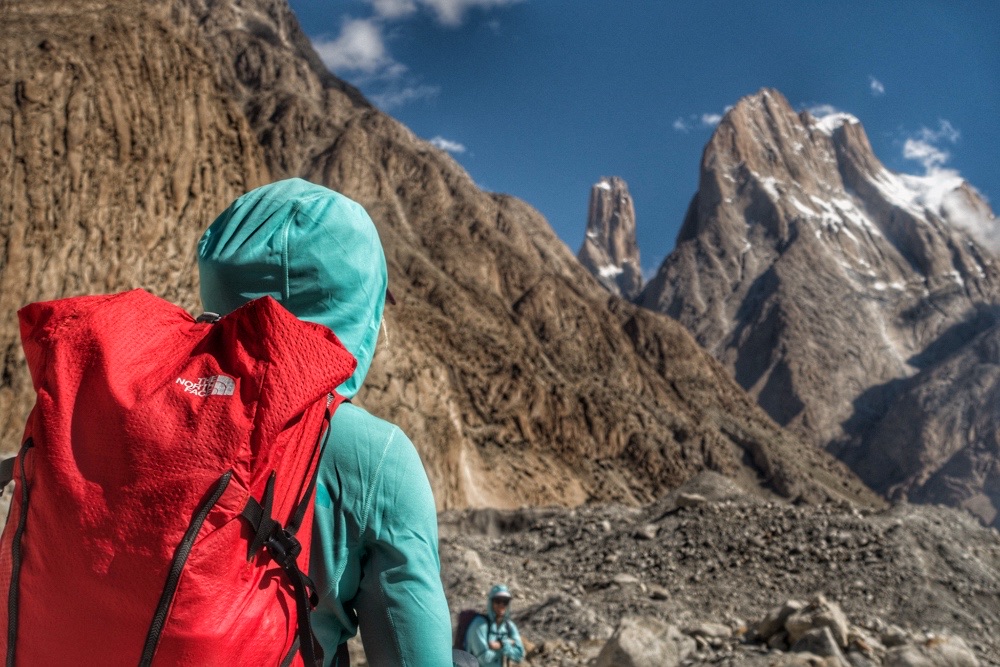
But I really enjoy that whole sense of looking through the American Alpine Journal and going down that rabbit hole of like, I have all these screens open on my computer about different places to climb. And a lot of it is because of the area itself and the mountains and just the whole package of a lot of the unclimbed routes or places that I've been more about the adventure of the whole thing, rather than this, really highly technical pursuit.
Jeannie: Which speaks to your well-roundedness as a human being, which I love. Traveling to Asia is not easy, especially when you have dietary things or allergies or whatever it is, right? Traveling there is challenging. It's super exciting. It's like having a really amazing teacher in your life, who just shifts the whole direction of your life. Like one thing happens and your whole trajectory of life goes a certain way.
And it could have just been a slight deviation from that first trip that made you go, whoa, I don't ever want to come back here. You know what I mean? And instead of this really amazing experience, and like it opened this door. It's not that common, but I think it's really cool that that opened the door for you. And you went, I love traveling and I love exploring cultures and people and mountains, and it doesn't have to be rad cutting-edge climbing, even though you did a lot of it.
Anna: I ended up doing four trips to India, two of them being in the Kashmir region, and then you know, like exploratory trips into Pakistan and Nepal and Peru and Colombia, and it kind of where's the next spot, you know, and I'm still like that in a way. And then even, looking at places like around home, you know, in the San Juans, places that are less explored.
With all that being said, I still love the challenge of pushing the technical level of things and trying routes that are hard, and having those projects around home that are technically harder to keep pushing you in a different way.
I think that's the beauty of climbing. There's like a lot of different ways that you can push yourself with it, whether it's like learning a new skill set of like learning how to aid climb or learning how to crack climb or learning how to sport climb or tread climb or alpine climb. The list goes on and on, right?
And then having the grades of, okay, now I can climb the 5.10. Now I want to try to climb the 5.11 and 5.12. So it's just so diverse. There's so much that you can do with it to really push yourself in a lot of different ways at these different stages in our life, too, right?
Jeannie: Totally, yeah. I mean, I think that's the beauty of you getting into it so early in life. Like for me, I feel like there's so much I still want to do, and I kind of my real passion for it came a little bit later, even though I dabbled in climbing forever. But but do you ever find the crux of being so versatile and loving all the different aspects also a bit of a crutch in the sense of like, I don't know, I think it's really interesting to me that people who are at the very, very, very cutting edge have had to shut doors on a lot of different aspects of climbing to be the best at that or as good as they, you know, their best at that, let's say. Do you ever struggle with like, oh, should I close a couple doors? Because I really want to get, you know, set some different grades in sport or trad or like go for an alpine route, you know, that might require closing some doors on some aspects of climbing.
Anna: Oh, yeah. I mean, that's always an ongoing thing in my brain, right? For me, it's usually rock climbing. I want to push these grades, sport climbing and see what I can do. And then, but it takes time, right? And it takes dedication and commitment. And then it's like alpine climbing season and ice climbing season, and you know, looking at the temps, I'm like, oh, it's 50 degrees tomorrow. Could I go rock climbing, or I could actually go ice climbing without being super cold? And so yeah, there is that for sure.
But I do think that there's a nice balance with it that you can find or that I can find that is, it also is what keeps it interesting too, because then I don't if I solely go sport climbing all the time, it's really hard for me to get into that mindset of projecting a route over and over. I mean I've done it and it's awesome, but I really gravitate more towards the mountains and like doing those big alpine routes. And I think like when you dabble back and forth, it just really makes you kind of like have that perspective on what you love to do and what you where you really want to be spending your time.
Jeannie: Yeah, maybe that leads into sort of a little bit more of talking about your sponsorships and then as that grew and as your love of alpine climbing, which takes more time, grew. What shifted in terms of letting go of some of the nursing and how does that and then the next question would be how does it feel to be a 100% professional climber?
Anna: Yeah, I mean, even up to the day that I was able to leave nursing full time behind, I was still kind of like, what's happening? Am I doing the right thing? It was definitely a big leap because I had always supported myself through nursing.
I left home when I was fairly young, home being in Ohio. And yeah, I just it was kind of like taking that leap into the unknown a little bit. But I think the beauty with the nursing profession is that you can always go back into it. Like I'm sure at some point, I'll go back into nursing. Um, I'll be a nurse again in the hospital. And that's fine. You know, it's something that I still have in my heart and in my brain. And I do think that could be something that I do.
Cat: It's something that you can come back to if you pull back from climbing at some point.
Anna: Yeah, for sure.
Jeannie: Yeah, was there a pivotal moment of where you went, okay, I can I want to be full-time, professional climber versus letting go of nursing, or did it just evolve where you went, okay, it's time for me.
Anna: I mean, I think right now, in my life in terms of how I support myself is kind of multifaceted. Like, you know, I do a little bit of guiding here in Ouray, and then I do a little bit of public speaking, and then you know, I have some brand partnerships. And I think figuring out how to make it all work together to where it's sustainable takes some time. And I think for me, I realized that stepping away from the hospital and kind of going all in on climbing was something that I wanted to try and see if it worked and see if I could make it work. It takes some creativity, I think, to put all the pieces together. And it was also where it goes back to saying yes to the process, without really knowing where it's gonna go or what the trajectory is gonna be, but just kind of seeing what that has to offer at the time.
Jeannie: How does that feel to you now?
Anna: Yeah, it feels great. I'm so happy. I love all the brands that I work with. I've been really fortunate to have pretty long relationships with the brands that I work with. I don't really work with any brand that I don't feel aligned with. So I just, you know, I feel really fortunate.
And I think, like I said, it's multifaceted. Like I do some design work with North Face. Not all of it is solely performance-based. I'm pretty involved with the clinics during the ice festivals, and then you know, public speaking and design with North Face, and then also the performance side of things too, with doing expeditions and doing photo shoots. So it's definitely being a professional athlete, there's a lot of pieces to it. It's not just one thing.
Jeannie: Yeah, and that's really nice to bring out because there is a perception that some people just get a paycheck and get to go climbing. And I think I really see you as one of the people who really puts a lot into your sponsorships. I mean, you really respect why they're doing it and you work hard for it, I feel like.
Anna: Yeah, totally. Yeah, and I mean that's something that's really intriguing to me about it too is that like there are these different roles that athletes have within the outdoor industry, you know, like community-based projects and like mentorship and how can you give back to the community and what do you have to offer to the communities that you work with or that you come into contact with every day. And I think that's important. And in a lot of ways, like my earlier career as a nurse, I feel like it gave me this beautiful skill set to connect with people who maybe aren't you know in the outdoor industry or don't understand climbing or have questions. And I just feel like that's a gift that I was given from my career, the early days of being a nurse. It's just like the understanding of like, well, not everyone understands what climbing is, but I want to share that with them and maybe they can find joy in it too. So I think that that's really cool.
Cat: Yeah. What advice would you give to someone who really wants their career to be climbing? What advice would you give to them in terms of not only getting really good at climbing, but in terms of showing up as a team member and showing up in the way that they communicate with brands and things like that.
Anna: I mean, I think ultimately climbing is something that one should be doing surely for the love of climbing, like for the movement, for I don't this is a really hard question for me to answer just because I don't know to be honest. Like I just go climbing and love climbing and to be a professional climber, if that's what you want your future to be, like, just like go climbing and love climbing and try your best and try your hardest at it.
Cat: It does seem like the fact that you can't really break it down actually makes it really obvious to me that you weren't breaking down how to make a “career” happen. You just were doing what you loved. And I think when you do that in life, when we do that in life, you know, the universe responds to that and the community around that thing sees your passion and responds to that, and then wants to support you and wants you to represent them. I think the non-answer is actually a really good answer.
Jeannie: Which I think is more challenging today than when you kind of signed on originally, like we said, right? Like today, younger climbers are seeing that it's possible to be a professional.
Anna: Right.
Jeannie: Yeah. I would just say the two things you embody the most: you are super connected to people and you're empathic and you're compassionate, and you also see it as a job. And so you reflect that in the work you do for your sponsors, and you respect that there's certain things you need to do. That's a gift.
I'm gonna jump for a sec to something that relates to your nursing giving you that empathy and connection, that ability to really learn how to connect with people of all walks of life. Because I was hanging out with a couple nurses, and they were just like, oh my god, sometimes, you're cleaning up this person's yeah…you know, I'm wiping this 400-pound guy's ass. And he does not, he does not want to change anything.
Anna: Yeah.
Jeannie: You know, it's really difficult. I don't think people appreciate how hard nursing is.
Anna: Totally.
Jeannie: Without spending too much time on your accident and your feet, the accident happened. There's two things. One is your drive to go back into climbing and to find a space to be in the mountains again is really interesting to me. Because I mean, it could have gone any which way, right? But I think with that, I suspect that in your speaking engagements, I would find you one of the more interesting people to speak to the average corporate mainstream people about overcoming something like losing your toes and your nursing.
I'm kind of jumping here a little bit to the military guy that you talked to when you were still trying to save your toes, and he said, Look, you're a nurse. If you walked into a room and you saw someone with these toes, what would you think? And you were like, Take them off, you know, take them off now. Or as you were before that moment, I'm not losing my toes.
Yeah. I think that that's such a pivotal moment in your life, I'm sure, in the sense of the empathy in this, with yourself, right? Like, this shit happens in life.I've seen a lot of it in different forms as a nurse, and you can move on and you can move forward. And a lot of mainstream people would look at you and be like, What the fuck, honey? Like, you just lost your toes. Maybe you could go do something else now and be able to, you know, like sit on the beach and you know, take up surfing or something that's not going back into the cold.
Anna: Totally. I think after having my accident in Alaska where I, you know, sustained frostbite and lost six of my toes, I really sat with myself and deep in the recovery process, I told myself, you don't have to climb anymore. Like, it's okay to not climb again. You don't have to do it. Like my inner voice was like, okay, cool. We don't have to do that anymore. And then like as I started, you know, recovering more, I was like, well, maybe I can just see how it goes, see if I like it still.
And, you know, those early days in recovery is Andres and I going into the climbing gym, and I couldn't put climbing shoes on, so I would just wear like regular approach shoes and a super tight top rope, trying to climb the 5.5 or the 5.4, the easiest route. And I'm like, wow, this feels really good. I really do enjoy this movement, and I like the way that climbing makes me feel, and I like problem solving of how am I gonna position my body to move myself up the wall. And I kind of just found that love again for it, but I don't know that I would have found the love again without allowing myself the grace to be okay with not doing it. So I told myself, you don't have to do it, and then tried it again and just loved it. And it's been, let's see, that my accident happened in 2022. So it'll be four years this spring. And I've kind of just kept that same mindset of like, okay, let's try the route and let's see how it feels. And, regardless of what the grade is or what style of climbing it is, do I actually want to be here doing this? And 10 out of 10 times I do, because if I don't and I have the ability to, I just don't do it that day. I'm like, I don't want to be doing this this day. It's too cold, it's negative 20 or something like that. Like, I can't, I can't do that stuff anymore, right?
Jeannie: Like what did it feel like when you took your first steps into the mountains again?
Anna: Yeah, when I first took steps back into the mountains, Andres and I went and tried a route in Silverton called Second Gully. And it was a lot of tears and crying, and just like I couldn't believe that I was actually climbing again and going into the mountains again. But then there was a lot of trepidation and uncertainty, and I didn't know how cold my feet were, and should I be doing that again? And, why am I doing this again? And you know, all the what ifs. What if this happened? What if the four toes that I still have get frostbite again?
And I think just with time, I've learned how to manage it better and just be really aware of what's going on with my body. So now I just have a different relationship with it to where I'm kind of just constantly breaking down what I'm doing, where I am, how is my circulation? Am I doing anything that I feel like I shouldn't be doing? It's just like checking in. And that has allowed me to continue to find that joy with climbing and the love that I have for it. It just looks a little different now than it did before.
Jeannie: And when you first went back to Alaska, the bigger mountains, did that just open this huge thing in your heart to be back in wilderness and mountains and wildness again?
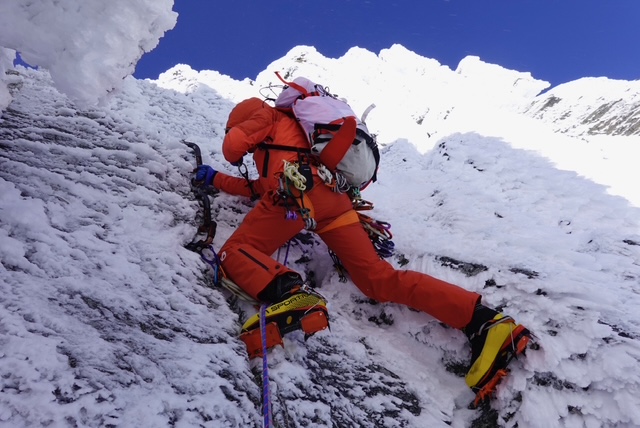
Anna: Yeah, when I first went back to Alaska, that was spring of 2024. And we were doing a mentorship project with the North Face. So we went to Moose's Tooth to go climb Ham and Eggs. And then right after that was the first attempt that we had on Mount Providence. And on that climb, you know, it was really wild to be back there. And you know, one of the reasons why we didn't make it to the summit on that first attempt was my trepidation and uncertainty. We had pretty stable weather, but then the weather window was kind of shutting down sooner than we thought it was. I just like I can't do that now.
We didn't have enough gas for another bivy. And prior to having the frostbite injury, like I probably would have pushed through and maybe we could have made it to the summit and everything was fine. And I didn't have to worry about how, you know, how cold it was going to be or whether we had like fuel for another bivy, those kinds of things. But now I can't do that. I have to be more cognizant of my injury and owning that.
So we turned around and went down, and it was the right decision because the weather window shut down, and we're very happy to be back at base camp and not up on the mountain. But I think the triumphant joy, the like, holy shit, I'm doing it again came last spring when we actually stood on top of Mount Providence. And that was really cool for me because I felt like it was a route that I would have been very proud of even before my injury. And it was a route that I shared leads on. Like I felt like I did my part putting the rope up and I was a part of the team. I wasn't just following pitches and people were taking me up the mountain. I felt like I contributed in a way that it helped us be successful. And that was really a big, a big moment for me. And I felt like I had managed my injury well and I didn't do anything that was stupid or pushing when I shouldn't have been pushing. And I felt like I learned my lesson from getting frostbite and really, you know, was honest with myself and was still able to find success in the mountains in a way that is really true to myself and my core values of climbing.
Jeannie: And so what are the few things that drive you now to want to go into the alpine? Like what what fuels you most about because obviously you said you had to change a few things in terms of how you approach it and yeah, I mean, I think now like I've learned so much about how to care for my injury, and then also to like I mean, even to care for partners in the mountains and you know, through my experience and be a better partner too.
Anna: Just my joy of being in the mountains and really having a goal or looking for something to do that's obtainable for the team, and then also going into the mountains with partners that understand where I'm coming from. That's a big one for me, right? Like I always like kind of joke with my partners, but also in all seriousness, like I come with baggage now.
Jeannie: We all come with baggage, right? I mean, I think you're summing up something for all of us. You don't have to.
Anna: Yeah, like this is what I bring. Like, I've had this really traumatic event that happened in the mountains, and I like I've learned a shitload from it, and that's what I have to offer too, I think it's just really good when people go into the mountains to just be honest with where you're at, like with your skill set, with what you can lead, with what you can't lead, with what scares you, with what doesn't scare you, with all of it. If you're just honest and lay it all on the table, and then you choose an objective for the team that matches everyone's ability and desire of what they want to do, that's how you can set yourself up for success, right? Or one of the ways that you can set yourself up for success in the mountains. And I think it's just for me to take what I learned from my injury and keep trying to do what I love, and then also share with other people what I personally learned from it so that they can also use that in their life as well.
Jeannie: Yeah, I mean, I think that's a gift, and it sometimes takes really hard things to learn that. But a lot of times, you know, we're so amped and we go into the mountains, whether it's to ski something on an average day in the backcountry or something big or to climb something big. I mean, you went with Priti and you didn't even know her. You met at the airport or whatever when you went to Huntington, right? And I mean, it would be interesting to know, like, were you clear with each other? Like, what are our personal goals with this trip, right? And what are we bringing to the table? And what's maybe some stuff, call it baggage that we're still bringing to the table. I mean, I think it's a gift to all of us to to remember that, you know, when we go to these things, even if it's just a day, like I learned that from losing a friend in an avalanche and the perceptions people had of that day, our day, the team that was there, blew my mind. It reminds me to just not leave the car or not get an expedition off the ground before we talk about, hey, what's our objective? Is it to have fun? Is it to get powder turns today, or is it to send a big line? Is it to send a big route or to enjoy a partnership in the mountains on a really cool technical mixed route that's not at the cutting edge of all of our abilities? I mean, it's easy these days to just launch. I mean, there's so much information, there's more forecasting, there's, you know, more availability and accessibility to get to everything. And I don't know. I think it's easy to forget, like, wait, are we on the same page?
Anna: I even say this before my injury, there's partners for different objectives, right? And none of it is right or wrong. I have partners that I reach out to when I want to go do this thing, or I have partners that I reach out to when I want to go do that thing. And like, each partner is bringing something to the table that I'm seeking for that partnership to have success or a good time, or you know, success being a good time, not necessarily getting to the summit of something. It's really important to recognize that and listen to that. And climbing changes throughout our life. Like it's not whether you have an injury or don't have an injury, it's gonna change with like, you know, it looks different from when I was, you know, in my early 20s to even how I am now at 44. It's like we just change as people, and you just need to be adaptable with it and accept those changes and still just keep checking in with your reasoning, I think, of why you're doing it too.
Cat: Well, that's like one of the biggest things that has stood out to me, you know, watching the film about you and listening to some podcasts is you seem like such an evolved, kind person, Anna. And I just think it's so amazing that you really were willing to be like, okay, maybe I am not gonna climb again, maybe I don't want to climb again. I'm gonna actually allow myself to take a step back and fully check in with if I actually love this enough to do it again. And we're talking about this thing that has shaped your life for over 20 years, a huge part of your identity, and acknowledging that there's even a possibility of letting that go, I think most people just can't even go there in their minds. And it's just so cool to me to hear that you really opened that door of maybe this isn't gonna continue to be my thing. And then you like at the beginner level, climbing 5.5 in the gym, you were like, yeah, I love this. Like, I love how my body feels when I do this. This is still my thing, and it's just super inspiring. I think it's really easy to get lost in the things that make up our identities and forget why we continue to do them. So I just love that part of your story.
Jeannie: Let me ask you one thing that goes with that though. How did it feel with your sponsors and the thought that if you'd left climbing, you know, would you still have them? Or how did they perform for you during all of that? And the thought of losing that when you had you had already committed to that as your life, right? As your work.
Anna: Yeah, I mean, I just can't even say enough great things about the brands that I work with. Like they're all awesome and fully supportive, and I have great relationships with all the sponsors that I work with, and, yeah, I've received nothing but excellent support from all of them, which has been really amazing. I mean, most of the brands that I work with feel like extended family, like Las Sportiva, for example. I've worked with them since 2012. It's been a really long time that I've been with them. And I think like I said, they've just supported me through the ups and the downs, which has really been awesome.
Jeannie: Yeah, it's quite fortunate too, because I mean I think the reality that you had that support to get yourself back on your feet and to be able to full-time, you know, kind of recover and you know, it's a testament to your relationship with them and and that also that they stayed with you through that time and gave you that gift of you didn't have to go back to worrying about being a nurse at a time when you're just trying to recover and rediscover yourself and your your passions for life and what that would be.
Anna: Yeah, and I think at that time when I was really, you know, like my toes had just gotten taken off and I was like, I couldn't walk at all. And I was just like, holy shit, like what am I gonna do? You know, I'm 40 years old, and the two careers that I've built, I need to be able to walk. Like nursing, it's a lot of time on your feet. And being a professional climber, obviously, that's a lot of time on your feet, too. And I think that was a really scary time for me. Sometimes when we're in the worst of things, all you can see is the negative part, and it just seems like the end of the world, and everything's gonna be really bad. And then with time, it turns out that it's not as bad as we thought that it was gonna be. And oftentimes it is that way. Sometimes it's not, but oftentimes it is.
Jeannie: Was there any moment that you remember that shifted your consciousness to I'm gonna move forward. Like I'm gonna, I'm gonna, like you were just saying, how hard and dark and deep you can go into that rabbit hole when something like that goes down and you feel hopeless.
Anna: Yeah, my partner Andres was great in the recovery process in in the terms of like, I think it's important that you have someone giving you not only that tender caring love, but also the tough love of, you are gonna get up, you are gonna do this, and then you know, like as time progressed on and I could actually like climb and start leading stuff. That ability for him to recognize she can lead this, it's safe, she can do it. And then I'm like, no, I don't want to do this, I'm scared. But him being like, you're gonna do it. Like, I'm not putting the rope up right now for you. You're fully capable of doing it, like you can do it. Even if you have to like stop and take or whatever, like you're gonna go and do it. And I think having someone like that motivating you is really important in the recovery process of really pushing you, whether it's a friend or a partner or a family member or you know, a coach. I think that that was monumental in getting me back into the level that you know that I'm back climbing at now. And in a lot of ways, I'm climbing at the same level I was before the injury. And in you know, in some ways, like I'll never be able to climb like certain things, like slab climbing, for example, is kind of like not my forte. And I don't know if it ever was, but now I think about these like run-out 5.12 routes, I would just combust mid-route, you know.
I think it's important having those people to push you. A lot of the North Face teammates too were really monumental in helping me, like Brette Harrington and Christina Lusti, and like just getting out, you know, because for me too, it was like when I came back into climbing, I'm like coming back and I'm like, wow, I don't even know if I can like lead this 5.6 right now. I don't know what's gonna happen. And kind of laying it all out there and being like, hey, like I know we're professional athletes here, but I'm really unsure if I can do this, and having someone to be like, hey, I got you, you know what I mean? Like you can do it, just having that trust and camaraderie is really helpful.
Cat: Wow, yeah, that's really cool to hear. Yeah, it's also just really cool to hear. I don't know, just about adapting to a different body, you know, adapting to different feet and how incredibly resilient our bodies are. And yeah, like you said, slab climbing may never be the same. And with other types of climbing, you're figuring it out and and and your proprioception is adjusting and your balance has adjusted to different feet. And it's amazing. From a nursing perspective, it's fascinating. It's just really interesting. I'm sure you've learned a ton about vasculature and proprioception and all that.
Anna: Totally. And it, I mean, it's really amazing like how adaptable our bodies are. I remember when I first started walking again, I would just take a step. My right toe or my right foot doesn't have any toes on it anymore. So take a step forward with that right foot and just instantly fall over. Like if you're learning how to ride a bike for the first time, like I just didn't have the balance. I could feel my brain searching for this big toe that wasn't there, and I would just totally wipe out, and it was so frustrating. And I'm like, how can I not even walk? You know? And then within like a week or so, our body's so adaptable. And I think the body really wants to be well and to move forward, and just tuning into that and allowing that to happen is really important too.
Cat: I love that. The body wants to be well, it does.
Anna: The body wants to be well, yeah.
Cat: Yeah, it wants to recalibrate, it wants to find homeostasis.
Anna: I worked in children's ER for a few years, and then I worked in adult ER, and like it's night and day, kids want to be well. They want to.
Jeannie: It's like, the body is adaptable, it's our minds that don't, right? And the older we get, the minds get in our way, right? In summary, I think your acceptance at that point where you said I don't have to climb again, but I do want to walk again and I want to be whole again, and that may mean a different lifestyle, but I'm gonna be open to that, you know. And then that gave you the gift to sort of find the joy. And I love that you still have the love of being in the mountains, and I think that's something that a lot of people might, especially non-climbers, might not understand of going through an injury like that and a loss and still wanting to be out there. And that gives all of us great inspiration. So thank you.
Anna: Thank you.
Cat: I think our audience will take so much inspiration away from everything that you've said, including myself. I'm super inspired. And if not for recovering from injuries and the huge part that the mind plays into that, also just like following the love for climbing and the mountains and doing that with abandon.
Anna: Yeah, well, thanks you guys for the interview. I think you guys asked me before, and I was deep in the depths of everyone wanting to talk about my dead black toes, and I was like, I can't anymore. So sorry about that. This is probably better. I have more insight now.
Cat: Yeah, I think there's a lot of clarity and hindsight with that kind of stuff. So it's cool to catch you now, and yeah, much appreciated for sure.