
Cat: Welcome to the Broad Beta Podcast. I'm your producer and co-host, Cat Coe.
Jeannie: And I'm Jeannie Wall, co-founder of Broad Bata. And today we're excited to share stories of mountain women's adventures and to take a deep dive into how their lives have been transformed by their connection to wildness, both inside and out.
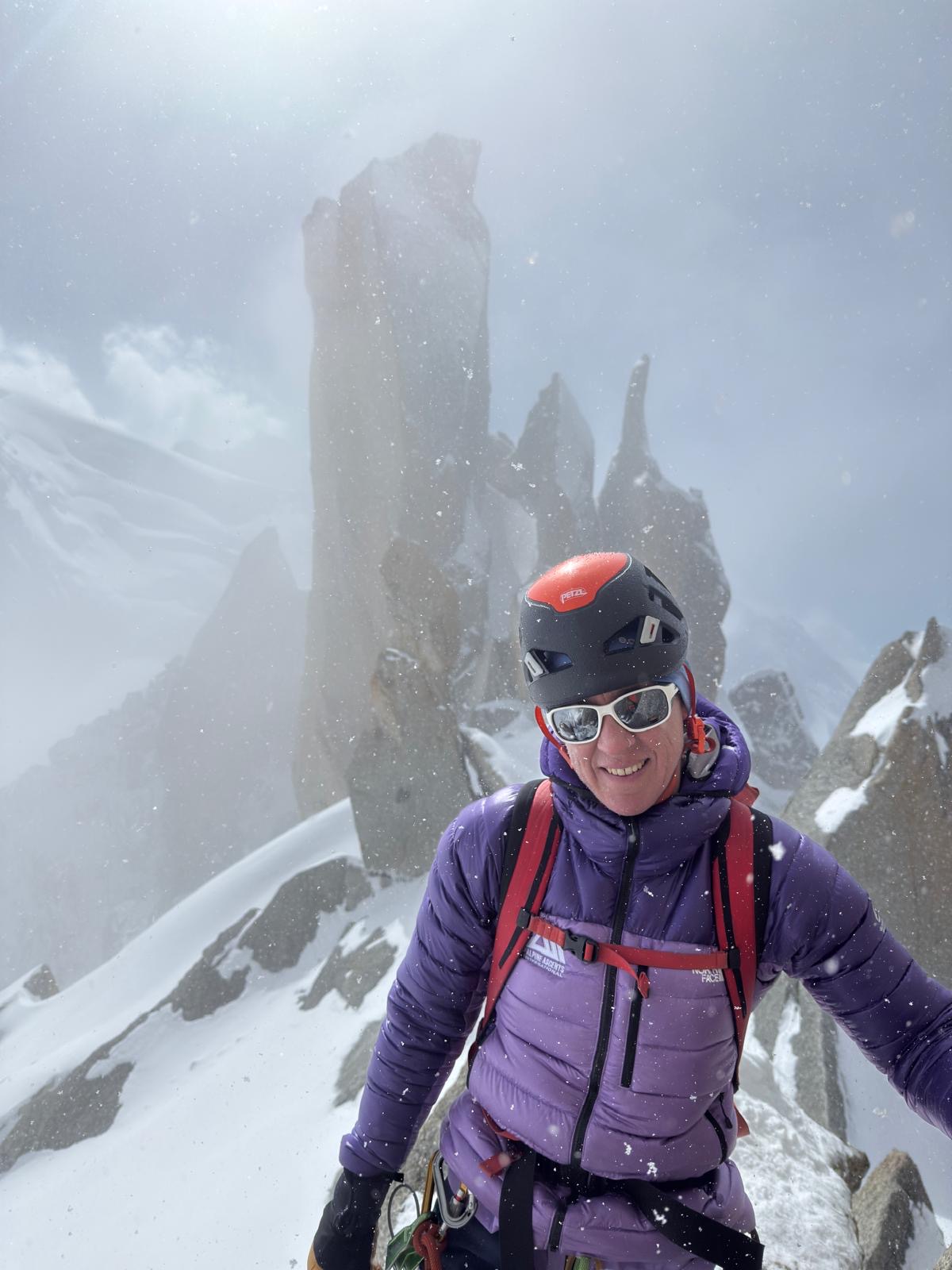
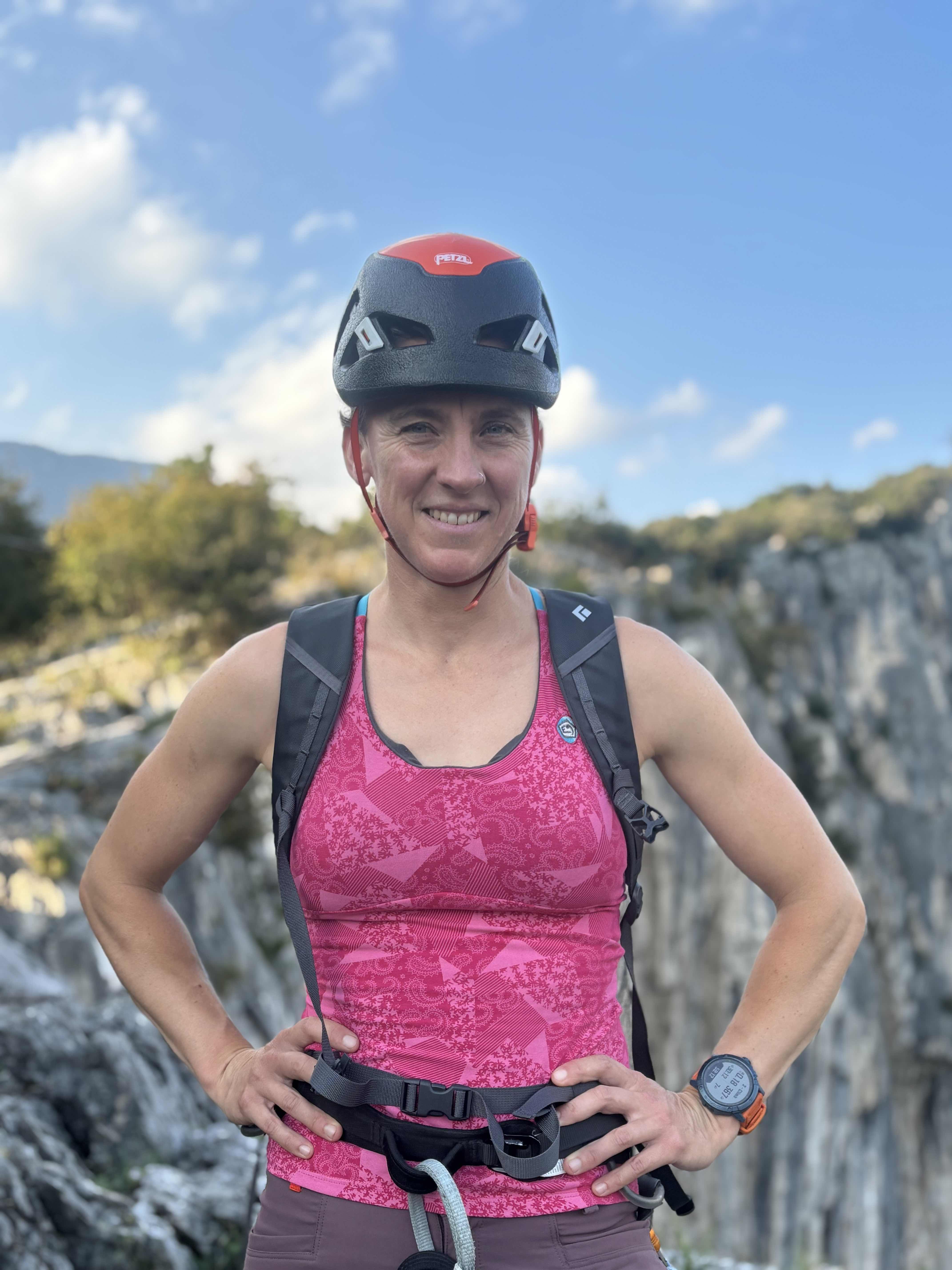
Cat: Our guest on today's episode is Lyra Pierotti. Lyra’s professional resume is one of the most impressive of all of our guests. She was the 18th American woman to earn IFMDA certification, giving her the ability to guide rock, alpine, and ski mountaineering internationally. She's also a certified Avalanche forecaster and an instructor trainer for ARI. But our conversation today focuses mostly on her certification as a strength and conditioning specialist. Lyra is using this training to give women performance strategies specifically targeted at female physiology and the energetic and metabolic fluctuations that can accompany a menstrual cycle. She brings sensitivity, intelligence, wit, and grace to the professional coaching and guiding worlds, and we love her for it. So without further ado, let's welcome Lyra. Let's just start with where you grew up and how that played into how you got into sports.
Lyra: I grew up in Vallejo, California, Far from the Mountains, with a single mom musician, and did not grow up with any of the mountain sports. I did grow up a competitive athlete, and I joked that I was like perfectly designed for biathlon. I got really into skate skiing as a young adult, but I grew up rollerblading, playing soccer and playing the violin. And that violin posture was perfect for holding a gun. That was kind of bizarre. And so I was an impeccable shot naturally, and then the start-stop heart rate from years of soccer and rollerblading came naturally as well. And so it's just a funny, I always like to point to that because athleticism is athleticism and can be developed at all ages. And connective tissues, we used to think that connective tissues had an age on them, and they do, I can speak to accumulative injuries and things, but we are always at a point where we can improve our fitness and health. So that's kind of where I came from. I did the tour of California, and went to UC San Diego and thought I was gonna head down the marine biology route, and then a job at a at Scripps Institution of Oceanography had just a perfect storm of interesting coincidences, and I ended up in a a job that took me, a field like tech job in biology that took me to the Sierra for a summer. And I was carrying massive backpacks and setting up field sites for a long-term ecological research site in the Sequoia Kings Canyon and based out of the White Mountain Research Station in Bishop, and there was no looking back from that one.
Cat: And how old were you when you did that?
Lyra: Through college, I had gotten way into rock climbing. I studied abroad twice. I was on track to finish early, and so I just paused and used some of the finances and scholarships that I had to fund a year in the French Alps. So that was formative, and that's where I met mountain guiding, and I was like, wait a minute, you can do this as a career, and it's a centuries-old career there. So that was really inspiring. But I learned to ski at age 20. I learned to ski in the French Alps.
Cat: Yeah. So then did you have some mentors in the French Alps that got you on the track to start working towards a career in guiding, or did that come a little bit later?
Lyra: Actually, it was a great question. It was more through university. There was an outdoor education program at the University of California, San Diego called Outback Adventures. It was kind of like an Outward Bound or Nols. A lot of the students that went through that program did end up working for Outward Bound and Nols and either coming back or moving on to education, outdoor education. And they had a related climbing gym. And so we staffed the climbing gym. And it just ended up being this kind of community of outdoor educators, outdoor recreation, college-age students. And we operated in Joshua Tree National Park and therefore we're regulated by the park regulations. And we had to have an AMDH trained, what we now call the single-pitch instructor on staff who oversaw our training. So that was my first brush with the AMGA. And I remembered just having noticed being out in the field with that team, how many more climbs we got in, how much more fun we had, how much safer it all. It was like just all the things. And I was really inspired by it. And that just kind of logged in the back of my mind for a long time. And then I was like, right, so marine biology and wherever that came from. I grew up on the coast, so a far cry from the ocean. Oh my gosh, so far. Oh, it was very funny, a better fit, I think, for me in the mountains. But I sink like a rock. I never took to surfing very well. It was a terrible surfer, but yeah, so that foundation, I think, just kind of got in there. It was really inspiring. And when I went to the Alps, that really sealed it. The access and the community, and then seeing that that was a reasonable thing you could do with your life seemed really cool. And so I came home and that was it.
Jeannie: That's interesting. Seeing guides in the Alps, obviously they make a full-time career of it and they make good money. But coming back to the AMGA and the fact that you had kind of started a good trajectory with your work, you know, in this era, is super curious to me. I can't imagine looking at that and being like, that's gonna just be great. I can see you already had this career track and you went into something far harder for women, especially, I think, and something that is very physical with obvious challenges as you age. So what was the catch?
Lyra: Oh gosh. I think that's such an adept way to frame it. Because now at 41, I am kind of like, good gracious, what was I thinking? You know, like talk about return on investment in the expense that I've paid to be a certified and internationally certified mountain guide is pretty silly. And I was fully self-funded and had some help here and there, and got a scholarship, but it's pricey. I do still sit here and say that it is the best choice I ever made and it fits me. And I've figured out ways to support it in the meantime. So I think the answer to it is I'm just not well suited to a seated desk job. And I'm a little bit more tolerant of it now. I have some friends who do it, but it's funny because in my little bubble of the world, the human who can sit at a desk and be productive for eight hours a day is the anomaly. And yet, so many people I think are capable of that. And so that's just not how my body is wired, and that's not how my brain works. And I need a lot more movement to feel good. I start to feel really bad without it. I’ll try to tell a brief-ish version of the story that kind of hooked me in there. I was working at REI and finishing up university in that last year after coming back from the Alps, and I got an email blurb from the ecology group that I was studying through with this job that took exactly what I had done with bugs in the mud that I was studying in the estuaries and even the deep sea, and like had gone on this like Alvin cruise in my in college and was squarely on that route. But it took those same bugs in the mud, and it was like, hey, we're looking for someone with outdoor leadership experience. And if you have experience with this type of identification of little bugs in the mud, that's a bonus. I opened the job description, and I thought that I was reading my resume. You know, it was one of those where you're like, huh, that's a fit. That's just one of those bizarre, quirky things. And so that was that first little like, huh? And it was White Mountain Research Station. I applied, immediately got called in, and my interview was to go backcountry skiing to meet the scientists who lived in Bishop. So I went up there for a long weekend in April, skied outside, like behind their house. And all of that just kind of pulled me there. And previously, when I lived in the French Alps, I remembered seeing this poster in a Patagonia store. And that poster at age 20, I looked at it and I was like, oh, that's my next place, you know, that youthful 20-year-old something. This is my next destination, my next poll. And I had a closer look at the heading and it says Owens Valley, California. And it's this woman running through Bishop years after, actually, it took me several years to find the spot where the photo was taken. And that was just one of those, like, smack in the face for a little 20-year-old self, myself, being like, oh, this is me too. I was like, oh, it's probably like Tanzania or Tibet or something. It was no, this is your home state kid. Show some respect. Go back to California. I was a rock climber, I'd never been to Bishop. And so then, you know, I go through, I'm finishing up classes and I get that posting, and I'm like, huh, that's my resume. Wait a minute. No, that's the job posting. And it's Bishop. Cool. So that was my next and very obvious move. And I got there and then out of nowhere, just memory of that poster when I was living in Bishop and I was riding my bike from my house to the scientist's house to work on a research paper after the summer of field work in the mountains.
And just trying to figure out my next move. And I'm like, God, what am I doing? And I was driving towards a master's, but I started to realize that I was actually trying to figure out a way to just stay there. And then in that time, I closed some of the loops, I went back to that photo, or that poster that I remembered from the French Alps, and I was like, I wonder who took that. And I emailed Patagonia and they were like, ah, we think this is a photo from a couple named Janine and Dan Patatucci, who lived there for a long time, and they retained the rights to their own work. You should email them. And so I did a long, rambling 20-year-old email, of course, like all excited and like, I moved here because of your photo. And they got right back to me. They're very charming. I coordinated a time to meet with Janine, who is in town. And I go and arrive early, and I sit and I have my coffee, like I’m waiting for a show. And this woman comes through the door with a poster rolled under her arm and sits down next to me, and I still have that poster in my house framed. And so that was just one of those, I think, early enough lessons that like sometimes you just gotta listen to what's being put in front of you. And that was a really important chapter. And I think the Eastern Sierra remains my favorite landscape on the planet, even having traveled the world. The only continent now I haven't been to is Asia, fun fact. And yeah, that part of my home state is still one of my favorites.
Cat: So I have to ask if obviously you have such a deep connection to that place. How did you end up leaving?
Lyra: Wildfire.
Cat: Okay.
Lyra: Literally, yeah. I mean, I think that's the simplest answer. There's a a bunch of factors, of course, like it's very remote, California's expensive, living as a guide, especially at that time, and being a younger guide was really hard. It was a challenging time in life. And when that rim fire in 2012 closed parts of Yosemite, the guides I was working as a climbing guide for Yosemite Mountaineering School, we lost a month and a half of work. And I had just so happened to leave early that year, and I was guiding a trekking trip in the Dolomites, so long before I could do any technical work in Europe. But I think that that kind of sunk in. I was like, maybe this place is not my forever place. And then the other nudge there too when I finished the rock certification, the next thing for me was going to be alpine and ski, and the Sierra climate being really kind of topsy turvy wasn't helping me out. And I would say too, that the rock is just so good there, it's hard to call it alpine. You don't get glaciers and you don't have great ice climbing, it's not all integrated into one experience. And I was like, you know what? I think Washington's gonna be my next place. But I didn't fully answer your question, Jeannie. Why the guiding? And I think in all of that, there were so many things that just kept sticking. Like I went through my first guide education and I liked that. I liked being outside. And then I came from a musician who I watched for all of my life teach people how to make small changes to their movements to produce something even better or more beautiful. And I think that's ultimately how I relate to guiding and coaching and my own athleticism is through movement, movement art, I would say, more than anything.
Jeannie: Well, that's a really interesting analogy, not being a musician, I always think it's more a teaching of how to hear something that's a subtle change, right? Not a movement change, but with the violin when you watch closely, that makes sense.
Cat: It sounds like leading trekking trips in the Dolomites, you were interested pretty early on in working abroad. And so did you have a goal of getting your guide pin pretty early on, or did that evolve as you got more and more into your guiding career?
Lyra: That's a great question. I think that it lodged in there pretty early, and I think early on I felt pretty driven by it. But like I said, I learned to ski at like 20.
Jeannie: And you hadn't really ice climbed much either, right? So those were both just things you were gonna have to learn and sort of think about it. It's always interesting to me with guides, because a lot of you kind of learn to ski or climb on the fly as you're learning to guide.
Lyra: Absolutely. And I think that it's an interesting thing because the American landscape is so different from the Alps landscape where you can grow up with all these things and in the mountains. You can take public transit, you know, and go ice climbing in Switzerland when you're a kid there. It's their life, it's their lifestyle.
Jeannie: Yes, for us the mountains are separate from how we live. And they live in the mountains. And so it's such a different way to view the world and the mountains and their work.
Lyra: It really is. And in that paradigm of being a guide and in what we've translated to our version, we have to go through three separate disciplines. And that ended up working. I blasted through the rock discipline and then kind of hit pause for a while because I was like, right, so what about this alpine and ski stuff? Cool. I'm athletic enough to have figured it out. And I was dedicated and young, I liked traveling. I'm more of that kind of personality, I like to be on the move. And so I think all of it was enough of a match for me. And I was able to persist with it. But it's interesting when I tell my friends in France, having lived there, they're just mystified at how we do the program here. And they're like, to go through your program, you have to travel to the four corners of the planet. And I'm like, yeah, I could tell you.
Jeannie: And you have to spend your own money, basically, which they also don't have to do. But my next question is, how financially did you feel about that whole process and what it would cost you and when you would break even? Then segue that into what did it feel like at that point being a woman in that realm?
Lyra: The finances. I think it feels silly to recommend it as a choice to make for financial benefit. But I think that when we try to quantify security or quality of life or all of these things, if it's a good match for you, it's a great choice. I wasn't totally sure that I was gonna finish the whole program. And when my mom moved to Italy, that gave me a little extra push. I was like, okay, let's get this thing done, just get through the end of the programs. I did like three programs in the last two years. And now there certainly is an increase in pay, which is great. And the access to work changes, which I really like. As I get older, I can do more things with lighter packs. That's becoming important. I can do less field days, and then my other business comes in and plays into that as well. And I think I feel a lot of a gain in security in the fact that I can work in a really different place. And that's added an element that I wasn't anticipating until it was available to me.
Cat: Can you go into that a little bit more?
Lyra: So I also speak French. And I can realistically move over there with work. And that's just kind of a neat thing to add to the world of things that makes me feel secure. You know, there is an alternative, like it's expensive to be an American. And if I crunch the numbers, there's ways to do things really differently. You can also move anywhere in the States, honestly.
Jeannie: You at least have quite a few places you can live if you really need to move.
Lyra: Yeah, absolutely. And now in the position I'm at, the pay being enough better, I can take fewer field days and potentially live somewhere more affordable.
Jeannie: So before we get into your business, which it sounds like that has also made it financially more stable for you to have this complementary business, and a lot of guides I think, find a secondary job, whether it's winter or summer. But before we jump into that, at the time you were going through all the courses, were there mentors for you. I think Lindsay Fixmer was a great mentor for you? But it seems to me there still weren't that many women in the guiding courses. It was still men who were the examiners. I mean, how did that feel for you?
Lyra: Yeah, great question. Like so many of us in that time, I think those who go through are going to be more of a personality or some match for the realities of the time. I think the things that added up to trouble for me were a little bit more in the realm of how you how you do the thing physically, how you physically are a guide, how you manage your your systems, your belay setups, your pack, all of your logistics, because we're… I heard the term used recently, a ‘vocational athlete.’ You know, it's like I wouldn't call a mountain guide a professional athlete. That's kind of a different thing, but you are using your job. And I heard someone call it a vocational athlete recently which I thought was very adept.
And I had at 30 a major physical shutdown. I came back from a Denali expedition, I had shooting pains down my left arm, and I had to take the rest of the season off. And I was like, either my career is over or I need to figure out how to do things differently. And so that for me personally ended up being the biggest crux, which I would say, is learning how to do all of the guide things with a body that's smaller and different. And then, you know, years down the road, that kind of led me down the coaching route as well. And beyond that, I think I was always that classic 1990s tomboy. So being around a bunch of dudes was mostly fine with some problems along the way that definitely almost made me not return at times. And I think finding a community was really helpful. And at every juncture there was an evolutionary step. So I would probably say that I'm one that could have got lost along the way and just barely didn't. And I'm glad I didn't because I really like guiding.
Cat: Are there any sliding door moments that you can think of specifically where you were lured back in at the last minute, like ready to step away, but somebody encouraged you or you had a successful trip or a breakthrough?
Lyra: Ooh, gosh. I wonder if I thought about that for a while, what would come to me? The first thing that stands out to me, obviously, is when I was injured, I took a step back and I went and worked the Antarctic program. And that was an opportunity where I could ask myself, basically, what am I doing? Like, what are you doing? Am I building a skill set that transfers to anything else? And the answer was yes, enough to keep me in it. And I think that program showed me how the skill set that I was developing as a technical guide and just the mountain sense and the experience, not to mention just the fascination that I had with seeing those parts of the planet and strange glacier dynamics. I don't think I had any idea just how much seeing those glaciers and spending that kind of time on them would impact and inform my future guiding back in Washington and the depth of the experience I now have to draw on, where I've seen so many different things changing at different scales. And I don't think I had any appreciation for the accumulation of experience in that way. Like maybe that's age related, or just having, you know, more like you learn things through school, or you do things like sport and you get better through practice, and the accumulation of experience wasn't on my radar. So I think at that time that was enough buy-in. I was like, okay, this skill set's cool, and there's something else happening here.
Jeannie: I like that connection. I think if you can help others find that connection to wildness and that kind of raw terrain, that you’re helping them find themselves. Obviously you were intimating the dangers and the skills needed to cross glaciers and live around glaciers and how that translates into guiding. But it sounds like you had a lot going on there that brought you back into still wanting to be out there and in the guiding world.
Lyra: Yeah, it's an interesting job. I think what I like about it is the angle of stewardship and the opportunity to, you know, and on the one hand, bring people into a new form of athleticism. And it is an increasingly fragile environment. And I mean, in the time I've been rock climbing, it certainly has become way more mainstream. And you can see in places there's big impacts to those that are harming the environment. And then there's other benefits where you see more advocacy. And I've I've always often said that too, that in taking people into wild places, they therefore appreciate and protect it better. I don't know if that's true. I like the idea.
Jeannie: I mean, hopefully you feel some of that with the people that you guide and connect with. The rest of us just see others out there and just have to hope they're having a connection. I think it's harder and harder in our sort of trophy-seeking world to believe that. But I like hearing that as a guide, that's important to you. Because I think, obviously you have to make a living too. It's a tricky balance of what you're teaching them, what the experience is that you're giving them.
Lyra: Yeah. Well, that and that's kind of a good segue because I think that is also an age-old problem with guiding. And even in some really great stories I'm reading from French guides, you know, they recount these stories where they're like, yeah, I like took on clients at the fringes of a season when it was borderline appropriate and had a close call and things like that, where you're just like, oh gosh, these pressures can be strange to complete an objective. And I think now, for my mind, the biggest challenge is the changing seasons that we have in the Northwest, for example, with the glaciers as they melt, as they're also thinning. We think of recession as sometimes the image that comes to mind is like a tide where the glaciers go out and they come back, but they also thin. And that's really important because they become like a pane of glass, they become more brittle. And so things are just falling down differently, and routes are changing, and change is happening more rapidly. We are changing our seasons, constraining our seasons more and more, and it's dynamic. There's a lot to consider. And so the choice I've made, and even going way back into the depths of history, and I don't have numbers on it, but I know a lot of guides in Europe have had other work in building careers. They will be hut managers, and they often will have other things going as well. So it's not wholly uncommon. There are a little better social services in Europe when I look at my basic living expenses compared to a European.
Jeannie: Yeah, I think it's way more common in the US that guides have a second career or second job.
Lyra: They do have higher taxes, but when you actually look at income brackets, it's actually pretty similar. And then when you add how much I pay in health insurance because I'm self-employed, that blows it out of the water. When I tell them my annual expenses just for living, they are shocked. And my other career is my own business, so I'm not getting around that entirely with having another more or less self-employment reality. But I had a client many years ago, and I just remember working with her and coaching her literally on every single step. I set her up with my colleague and I said, okay, you get the rope up there. And I walked right next to her for the entirety of the climb and was able to just remind her at these critical junctions to move better. And she was really responsive. And she was like 60. Her name was Virginia, I'll never forget her. And she summited and did a great job.
Cat: Was this on Rainier?
Lyra: It was on Mount Baker. Okay. On the Eastern Glaciers. So an appropriate first level kind of mountaineering objective. And she was scrappy and she pulled it off, and we were coming down, and she was like, you know, you sound like a coach. And that was another one that, like, oh, that went logged somewhere in the back of the brain, and then I just carried on and doing my guide thing and working on, you know, my interests. And then COVID was a big part of it in launching, taking time. I had fortunately enough to have paycheck protection for those few months in quarantine that I just dove into the business structures and all the admin side. And the year prior, for some reason, It had been in the back of my mind to get my strength and conditioning specialist for some years. And for whatever reason, I finally got the the bug to finish it because it was quite hard. I studied biology, but not exercise physiology. And so it took a lot of study for me to go back and like and ultimately pass the exam. It was like a month of very dedicated study in my off season. And so I got that. Oh my god. And it was plenty. That was very cool. But super interesting, I'm sure. And remains interesting. Yeah. And I went for the higher level because I had a background in science. I didn't want the personal trainer. I wanted that next level. I think I was starting to get a little wise. I was right around 31. And I was like, I need to think a little more creatively and a little more about my security. I had grown up with an example of my dad who went into tech and he was amazing at it. And he did the usual, I'm gonna raise kids and have a family, and my parents split when I was young. And then I had my mom, who was this artist, just kind of doing what she loved and very financially responsible and made it work. And so I just had these like weird models of like, how do you, how do you do the security thing? And then eventually that was the COVID push like, oh, now you have dedicated time, you are stable for a few months. And I had a couple clients that I had guided who were like client zero and called them. They're really great. They were two of them.
Cat: Are you coaching? I guess I'm trying to wrap my head around what type of movement you teach, because you're not giving people a weight training program or or things like that, are you? Or is it or is it more like that? Or are you actually helping people alter their their athletic movements to maintain healthier range of motion and ligaments and tendons and all that?
Lyra: Yeah. Yeah, I kind of try to tackle all of that in a remote setting. What I've put together for my full package is fairly low touch. And so that requires my clientele to be quite independent and self-driven, which is wonderful because I love working with that. I'm not gonna be the coach that shows up at 5:30 at the gym to really motivate someone. That's just not what you're gonna get from me. Maybe on the mountain, you know, I'll stand next to you and help. But when I was really injured, I saw a specialist and you self-report how much better you are. And I think I got to like 85% of normal. And they're like, okay, cool. Well, that's like, you know, acceptable. And then I was like, as a mountain guide, I need like 110% of normal, not 85%. So that started my journey on seeking body work to help me stay strong and balanced, and turned out to be a really great investment. I found people who helped me out of pathology, but I didn't find the person who could take, you know, that now healthier form and actually help me build in a way that was constructive for me and my body. So I started going to various training programs, usually for coaches. And then eventually I was like, oh, these are really helpful just for my own interest. And so I started, I got my certification, and then that gave me access to more and continuing education.
Cat: It sounds like you were not only pursuing a career as a coach, but also simultaneously trying to heal yourself.
Lyra: And actually, I would say the former or the latter first. It was more like I was trying to figure out like, okay, what am I gonna have to do to go to the raw materials here, you know, of how do you put your strength back together? And I had a whole youth as a competitive athlete, and in my teens, I was in the weight room. So I had a lot of competence and confidence in that. But yeah, so I started to develop a sense for how to support my body. And one of the big things and the big changes that I think made me feel like I was out of place in an industry, mostly with men, that then um now I know from from diving into the research on how to train the female physiology, is that the male physiology does really well with volume. They get stronger with volume. And the female physiology is extraordinary with endurance and needs to focus training on strength and power, otherwise, it will kind of go away. And so for me, working as a mountain guide, which is entirely volume, those strengths, I was gonna get really good at the thing that I do, but my strength and power was going to fall away until injury showed up, which it did.
Jeannie: Oh no, it just kind of makes me laugh because Lyra, I mean, you had the same experience probably with biathlon, but you know, no in the days when we were training in Nordic and biathlon, it's just it was like volume, volume, volume, and you did a little weightlifting. But it's taken me decades to learn that if I slow down and do power, I’m so much stronger even on the big days, right? And it's super interesting to hear you say that that is consistent, more consistent for women than men. I hadn't really thought about that. But I do think it is something I still see even when you watch the Olympics right now, you can tell. You'll always have the endurance, you know, when you're involved in those things. With climbing, we can all go walk around in the mountains and do big moderate days, but you can't withstand that or get on to the next level without those strength and power days. Sounds like you found the gap out there, in terms of your business acumen and and benefit with being with women, with that in particular, the strength thing, and then also maybe with injury and how do we move through injury and keep that balance.
Lyra: And I suspect that I got a little bit of that smack down younger than most. Cat, I was telling you this, but Jeannie, you were the first one that ever used the word celiac with me. I don't know if you remember that. That was right around that time as well. I was injured around 30 and it turns out very clearly I have celiac.
Jeannie: Wow, which is just loads of inflammation in your system, and you're not getting minerals and vitamins and so you can't heal. I didn't realize that you figured that out, that must have made a really profound difference.
Lyra: Yes, it made a huge difference. Once I unplugged that, it was for me. Fortunately, it was just that one thing. And once I unplugged that, then I started recovering. I started healing, my tissues got better, and then all of my 30s, I just kept getting stronger and more durable.
Which is exciting. I love that. We should all be more durable. That's good. Oh my gosh. I'm loving being in my 40s, that's for sure. It's been a good one. And it's, you know, you accumulate things with time, but we can definitely get smarter. And now we know we can train smarter and use the gifts of that female physiology. And yeah. I think what troubles me the most in retrospect, um, which seems very silly and very small, but I actually try because of my concurrent passion or my my two passions, is that I know that there were women along that path that would hear from men that you shouldn't need to train to be a mountain guide. And that hurts. That one really stings because it's such a lack of awareness. And this wasn't everywhere, but I think that there is just not enough of an acknowledgement of how whenever you have a community or something that is so homogenous, like all of the norms in there are going to be built upon assumptions rooted in that homogenous population. And if those assumptions are so prevalent and then super damaging, and then we end up with stereotypes and things that confirm themselves because we're just setting up an entire population to not thrive or feel good. And it has been liberating to find other information and then put myself through it and feel so much better, and then work with other women athletes. I’m mostly working with women athletes who are in the mountain sports. And it's mind-boggling how empowering it is and restorative.
Jeannie: Interesting. I feel like we need a whole other book about endurance athletes and uphill athletes that's just for women. I know those guys who wrote that book, they did a brilliant job, but it's still very male focused in terms of what it's like learning all about coal plunging for women, or fasting, and how different that is with our hormones and how everything is tied up in how different we recover and how we how different we need to train for power.
Cat: Well, I have two questions. So the women needing to train for power. Do you know what the physiology is behind that? I'm just curious.
Lyra: It is a link to the way that our hormones work in our body, specifically in locking into fat-burning metabolism or endurance, having a preference for that. Yeah. So then, when you are in the first part of or what we consider the follicular phase. When you are building up to ovulation, our immune system is very strong and you can tolerate most kinds of training. And all of this too is all about monitoring yourself, you know, and responding to your body and getting to know what works for you. And it's not prescriptive, everyone's going to be a little different. But there are elements of the biology that are actually happening that are really important. And the things that I've found the most constructive and seen to be the most constructive anecdotally, and for myself, is first not to stress too much about getting it perfect. And then pay attention, keep a log. And so you start to learn your own patterns. And that can be a really simple log, but some sort of a log that you are aware of where your cycle is, what training you did, and how you felt and how you recovered. And then from that, when you go up from ovulation towards the end of your cycle, that's when your hormones kind of start to get wild. They rise at different rates, they overlap and they have different impacts depending on how they do that. You hit perimenopause, and then they're doing that at different rates because your ovaries are not sending as much estrogen anymore, and it just kind of gets chaotic. When that is happening, that's called the luteal phase. Your basal metabolic rate is higher, your heart rate will tend to be higher, your resting heart rate's higher, and you want to eat more food to feel the same way. That's when you want to hydrate better and focus on electrolytes and all of those things. And notably, I always have to still remember to remind myself when I'm in that phase. I have to make sure that I'm consuming more sugar, more simple sugars when I'm working out. Carb loading doesn't really work for a female physiology. But when you are strained in that luteal phase, if you keep a more regular hydration electrolyte and fueling strategy and boost that sugar consumption, whatever form of sugar works for you, that can really help your performance. And then you're like, oh, I feel normal. And if you don't, you get that quick feedback, and you're like, oh, I feel terrible.
Cat: I was gonna ask, you know, where does perimenopause fit into this when your cycle starts to be more all over the place and tracking is harder or maybe not as effective? Are most of your clients pre-perimenopausal? Or do you have enough of a mix that you've seen different things that work for the different phases?
Lyra: I've got a total mix going. It's awesome. And some dudes. And the dudes are awesome. They're all like 30s and older. And I think honestly, in so much of our training literature, it's rooted in science that has been done on the 20-something year old male for the most part. And so even aging men are a little bit lost in the sauce as well. So that's just an interesting aside. For female physiology, I think there's always the question like, well, what if I'm on some sort of contraception and I can't track, or if I have an IUD and I can't track. And with IUDs, you're still ovulating, and you can use ovulation predictor strips, and you can find your cycle in that way. And if that's just too cumbersome, don't even worry about it. Just keep a log. And my favorite story I can share about that one is one woman I've been working with for years who's turning 40 soon. When we started working together, her PCOS was quite severe. Her cycle was undetectable. And she now has a regular cycle. And in her, she's been on it in all of the ways, you know, and training with me was one of those. And what we did was just say, okay, well, we're going to understand that there is a cycle somewhere under here, and that training in a way that is responsive to your physiology is going to help to remove a stressor that's unnecessary. And so we just developed a way of communicating and logging things and monitoring and responding to her body and her feelings around the things and how it responded. A tool that's really useful for that is heart rate variability.
Cat: Oh yeah.
Lyra: And if you don't want to use anything, that's also fine. Like literally your own feelings about things is the gold standard. Heart rate variability can add a confirmation to that and can help you cut through the noise. And so that's my favorite tool out there. What we first did was just have her report every morning her energy on a percentage scale. And then we started to notice that there were a couple of weeks in a row that her energy would be sustained at like 90 to 100% every morning, and then it would suddenly drop and it would be in the like 50% range for a while. And so over time we just watched that and then became convinced that we were like, I think we might be seeing your body's natural cycle, and we just stayed consistently responsive to her energy. Wow. And in so doing, then we're removing the stressors from a time that her body was otherwise extra stressed. And I don't want this to come across as like you can't perform at certain times of your cycle, you absolutely can. And the awareness of what is going on is really helpful for your fueling and your hydration strategies. And that's the big takeaway. Um, and it's not that you have to work out this way or that way. Sleep hygiene is definitely more important when your body is otherwise under stress. But all of this is just helping indicate it's in that luteal phase, our bodies are a little extra taxed, and so they deserve a little extra strategy and care and recovery.
Cat: I love that. I love that you keep it simple and digestible. You don't need to go out and get a Whoop or some expensive device to check your HRV every morning. I really love that just writing down a percentage that indicates how much energy you feel and just trusting that. Like we don't need a device to tell us how we feel.
Jeannie: Yes, I love that too. I mean, in a world where there are a million devices now and you there's a million forms of feedback, right? That are telling us, take collagen, take creatine, take supplements and check your HRV and do this and be on Strava. And oh my gosh. You know, I think also just in training, if you like being competitive at a sport, you know, you had the schedule, and it was sort of based on these, at least in my case, male coaches who would be like, okay, three weeks on, one week off. It never had anything to do with our cycles or how we really felt, right? So it was super easy to get over-trained and underpowered. And I think it sounds really beautiful the work you're doing to bring it back to just a human and in your case, you know, of a feminine, female like hormonal level, where maybe she can go two weeks fully on, but then that week off needs to be like a big week off, right?
Cat: And we never give ourselves the confidence in self-reflection,, or I will just say it's hard to give ourselves in this culture of everybody hiring life coaches and coaches and trainers, and you know, I think we've been trained, and literally trained in your case, Jeannie, and then trained by society and trained by working in the male-dominated guiding industry to not respect our cycle and ignore it and to keep on keeping on, which maybe is fine for men, but I know for me, the beginning and the end of my cycle, I feel like a different person, like energetically, just up for totally different types of objectives at different points in my cycle.
Jeannie: And let's say you're in the Olympics and you don't have a choice, right? And you're in your biggest race at the worst hormonal time of your month. Oh my gosh. But just understanding that, just having that information that you could work with someone and be like, okay, you're gonna get to that starting gate. And rather than go, oh my god, this is the worst day of the month for me to do this race. Maybe we actually get some tools, you know, maybe there are tools out there we can use for those days. With climbing, we're lucky it's not a competitive sport, for the most part, so we can pick our objectives, but sometimes you can't. Sometimes you're out there and you're on a climb and you have to keep going.
Lyra: A friend recently sent me an article about some new research into female physiology and the headline, the way that they wrote the headline, it pointed to something that helps female athletes avoid injury. And it just it hit me really hard in a negative way because it was in front of my face was like, why? Like then the article started and it was all about female performance and all these cool things. And I was like, but why in the headline did you highlight injury? And there's still, I think, a really troubling theme of the way that we talk about female performance, and it goes back to a lot of the uninformed vilification of women training through pregnancies, for example. And that messaging still sneaks in there and it really breaks my heart. It's interesting to see where we go with the research. And my hope is that we don't get pigeonholed. Helping with injury is great. But how do we help women thrive in all of the life cycles? That research is getting better. We are starting to now see studies for peri and post-menopausal populations that are on active populations more and more. And that messaging and that steering of the research, I hope, continues in a way that helps us to develop more tools and resources so that we can be in that phase where we're like, oh, I feel more taxed. We have a few things now with fueling and hydrating. But that would be my wish for the future of the research.
Jeannie: Yeah, well, I think even in your work, the re-languaging of that and the way you are coaching and teaching and helping people, I think that's the best place to start, right? I mean, the research papers, it would be really helpful if they would get it as well. But I think you're taking that research and you're putting it into real life experience and helping people. And just this conversation and the language that you've used in the way that you've choreographed that in terms of the work you're doing and what the help that you know many of us might need and not even know it, and that there's actually the help is out there, is super encouraging and really exciting.
Lyra: Sometimes just the validation, you know, and I often will remind my athletes that it's okay to take two days off in a row if you're not feeling great. Like the rest days are such a hard sell. Like you're gonna be okay. I promise.
Jeannie: And if only you can get through to all of us with that, it'll be monumental! And such progress.
Cat: So, Lira, I have a question for you. And this is like just me asking you for some quick free advice. I totally tend towards only endurance training. That's what feels good for me. But honestly, the biggest thing is I don't get injured doing that. And whenever I start strength training, I tend to get injured. And is that a thing that you have seen with women that are inexperienced with lifting weights? Or is it probably like starting too heavy?
Lyra: You should come into the gym and we'll look at things together!
Cat: Okay.
Lyra: That is probably the case. My next continuing education I'm super excited about is I'm working on being a corrective exercise specialist. That an exciting branch of all of this because that takes what I feel like a lot of the intuitive stuff that I've picked up on in just moving my body over many years and being a sensitive person into a much more efficient package and a couple of movements that you can do and assess and look at someone and say, ah, here's the imbalance, and here's your prescription, literally. So that's just a way that I'm balancing my professional skill set. But also every athlete is different. And just because the world of being a female athlete is buzzing right now about strength training, there's also plenty, like the dominant paradigm we're seeing around that in general, the female physiology is more predisposed to perform or respond better to sport in the late morning to mid-afternoon. And early morning workouts are not recommended. And I have women that I train who are early morning workouters, and it's fine, you know, and so there is also a spectrum within all the spectrums. But I would probably say for you, it could be probably some in some form related. Did you grow up in a weight room at all doing any strength training?
Cat: I did not touch a weight until I was like 35. I lifted a beer or two, before then!
Lyra: And I think that that speaks to the other little fire in my heart, which is the extent to which we've been excluded from that knowledge is providing a lot of trouble in our data currently. You know, like when we do all these studies and they're on a population that has systemically not been involved in sport in a certain way, then that data is going to be skewed. That's how science works and it corrects itself over time. But what we're dealing with right now is you and me in an age bracket that are not really being studied, like I happen to be strangely lucky in a town that had phenomenal coaches. I was a track athlete and a soccer athlete, and our track team went to state every year. And the coaches we had were unbelievable. And they put the girls in the weight room with everybody else. Cool. And we did the same things. And that experience, as I've gotten older and I've looked back on it, I'm just like, wow, Vallejo High School just knocked it out of the park. And those coaches were life-altering, like to this day. But that's not the norm. So I think that's a huge gap in just the movement. I guess multiple things. Like it is to some extent just walking into a weight room with a level of confidence and comfort and ease and knowing how things work.
Cat: Yes. Oh my gosh. I mean, I don't feel comfortable in a weight room at all, but yeah, it's a weird environment. Maybe I'll have to hire you for a little consultation. Come on down, or I’ll have to come on over and visit.
Jeannie: I love the combination that you've cultivated with guiding and this new quest to help women. I think the combination is super interesting. I mean, it gives me a lot of encouragement for the guiding industry. The women who you guide are lucky to have you.
Cat: And oh my gosh, I'm thinking about you coaching this woman step by step, and that is some true passion for your work and dedication to facilitating an amazing experience for another person. You obviously have to love what you do to be able to do that and and to come away from that trip, appreciating the experience rather than like, oh my God, screw that, I had to coach her every step.
Lyra: Yes. And I think that perfectly nails the sustainability of the career. And where, if it is, it is the hardest and silliest thing I could have ever chosen to do with my life, and it is such an impeccable fit that there's not a moment or a single hardship that I regret.
Cat: Well, it's a great reminder that you know, doing what you love in the end is a sustainable choice, and I think a financially responsible choice too, because you don't have a problem with going to work. And that's financially responsible in and of itself, just choosing to do something where that's not a problem.
Lyra: Security is a funny thing, and I think that we were as guides, back to work so fast in COVID because we worked outside. There have just been so many bizarre, I feel like in my life and career, there have been so many bizarre reflections that I've gotten where I'm just like, well, that's not quite what I thought.
Jeannie: You know, I will say this is a great eye-opener for me because usually I see my women friends who are trying to be guides or want to be guides, or they are guides already, but they're going down the you know, full certification path. And I can't say that I'm super encouraging just because I feel like A, there it's still a very male-driven world that's challenging. B, it costs a lot of money. And C, I think women's bodies don't hold up as long to that potentially full-time rigorous sort of profession. But, you know, it's like what you're saying is you'll find a balance, and it is still a really joyful and fulfilling and exciting career as a woman. The flip side is I want more women guides out there because it changes things. I just went skiing in the Tetons and I came across two groups of guys who were being guided by a woman, and I was like, rock on. It was so cool. I was just like, okay, this is finally happening. This is so good. And they looked all psyched, and it was great. So thank you for the work you're doing and for opening our minds and mine at least, into a lot of the different aspects of guiding and life in that realm and what you can do by finding something else to complement it to be fulfilled.
Lyra: Yeah, yeah. Yeah, and I think guiding is objectively hard on the body. And some people tolerate it, they tolerate that amount of volume better than others. I get ruffled when I'm like, oh, it feels like am just not up to the task because of who I am and because of how I'm built or because of whatever cards I've been dealt. And then I kind of try to shift it and wonder, like, well, but hold on, like the ask of this career of our bodies is objectively enormous. And why is that praised? Why is that normal? And is it okay to be the guide that you want to be and divest from that expectation of volume? Because I think there's also a lot of pressure there that, like, if you're a real guide, you're like in the field 200 days a year. And that's going away.
Jeannie: I kind of see a third profession for you. Well, I mean, it would be fascinating for the guiding industry, the AMGA specifically, probably in the states, to have someone like you in a position to work with women guides in that context of, how do you make this sustainable? What's the difference? Like, what things might you work on that are different from male guides? And that goes back to just the very beginning of what you said. It's like the profession used to be just climb or ski all the time. And you don't need to train for this. You just need to do it and do it well, and then everybody will respect you and you'll be a great guide. And like any profession, it's like you don't just become a parent by popping out a kid. You know, you kind of need to read some books and do some training and maybe study a little bit about what it's like to bring a kid into the world. Thank God I never did it. But you know, it's like you can actually do it and it can be really, really worthwhile. I think that would be amazing. And maybe the profession will evolve into having resources like that.
Lyra: Yeah. I mean, it's great I I love that you bring that up. The IFMJ, we did just have a meeting with several IFMGA women, American IFMJ women, and because the IFMGA from Switzerland is asking why aren't there more women on the international stage? So in the US, we are seven or eight percent, I think, and globally it’s two percent. And the context, which is fascinating, is that there's a competitor to the IFMGA, and it's a really reputable trekking certification. It is super cool, but they are thriving and they have a growing population of guides, and they are wanting to operate and bring ISACs crampons into their repertoire. And the IFMGA is like, wait, wait, wait, wait, wait, that's that's our terrain. So we are at an interesting, I think, crossroads. Can this other organization guide technical rock? No, I don't know a ton about it, but my understanding is it is like mountain trekking and everything that's not technical. But because they are thriving, they are psyched and they want to be able to expand their terrain. And I do feel as a guide that the extent and depth of experience that we've accumulated in training to the IFMGA level is phenomenally valuable. And so I think I would be in that camp that's like, hold on, let's actually keep those tools within this skill set.
Jeannie: But look at Exum, I mean, they ran a certain way to guide for 50 years and it worked really well. And absolutely I think evolving the mindset to the level that's needed for that trekking company to have guides that can do that, and not being so staunchly set that it's black and white and there's a line in the sand of like, no, you got to go through IFMGA training, you know, I think that's a detriment to their clients and the people. I don't know, there's something there that everybody can open their minds to that is not black and white.
Lyra: The more acute issue is that they are struggling to graduate IFMGA guides. And so then they don't have enough, and that's the pressure, they're like, hey, we have these people that can guide these things and that want to, like, we should have terrain access.
Cat: And so the in that structure of things, the problem seems to be that they're not graduating enough of those guides, and also I don't know the expenses of all the things, but I imagine is this because people aren't enrolling or not passing exams or not able to afford or all of the above?
Lyra: I believe every nation is maybe a little different. The outreach came from an acknowledgement that the American guiding, the AMGA, is doing a really good job with diversity and graduating more and more guides. And they were like, How are you doing this? In other areas, I think Switzerland, I believe, is graduating less. And just anecdotally, in my awareness, I think there is an acknowledgement of increasing hazards in the mountains related to glacial changes, relating to variable weather, seasonal constraints, and a lot of those glaciers receding such that the in-between terrain is becoming harder to get through. It's harder to access long time trade routes. So they're at a point where they're changing. I think Washington is starting to see this level of rapid change now, but I think from what I can view, it seems like the Alps are like 10 or 20 years advanced.
Jeannie: Yes, they are in front of us with all of that. This is all super interesting and I really value your work and appreciate it. And I'm so glad to learn more of where you've landed and what you're doing. It's really inspiring.
Lyra: Yes, great to reconnect.
Cat: I guess we'll just wrap it up with if there's a brief nugget of advice that you would give to someone who's, you know, 22 and thinking about becoming a guide and going down the big path. What nugget would you share with them?
Lyra: It's not easy. But if it’s a good fit, it's absolutely worth it.